


Good Afternoon:


I spent ten days in Kyiv trying to photograph the ineffable darkness of the power outages in a major city at night. The camera cannot capture it. These are the best I could do. I wrote a little about the darkness in a Lawfare essay with the estimable Anastasiia Lapatina:
And then there is the darkness. Big cities are never truly dark. They emit their own light. Streetlights. Lights from windows. Lights from traffic. Neon signs on stores. When collected, tens of thousands of these lights diffuse through the atmospheric moisture and particles to create a kind of glow at the horizon.
Now imagine that most of those lights are suddenly off. A walk in the park at night becomes like a walk in the deep woods. It is just blackness. A giant Soviet-era apartment bloc is completely dark save the one or two windows of families with batteries. Non-essential storefront lighting not powered by generators goes off. The light haze at the horizon dims. Landmark buildings of the sort that are lit up in every city in the world are black shadows, visible more because one knows they are there than because one can really see them.
The eeriness is hard to overstate. The true effect cannot be photographed, because it lives in invisibility.
Thursday and Friday, there were no shows. I was busy departing the undisclosed location, which is to say Kyiv. As the estimable JB put it:

Monday, however, I was back in a disclosed location—Washington DC—with much news for the #GreekChorusFoundation:
I will go into detail on that news over the next few dog shirts, and as per the charter of the #GreekChorusFoundation, I will put a series of proposed new projects before the group for votes.
But first, the good news: The next $50,000 of donations to the #GreekChorusFoundation will all be matched by a very generous donor who wishes to remain anonymous. This donor has agreed to match beyond that if other matching donors can be found, up to a total of $300,000, so if you or anyone else you know wants to make a challenge grant that doubles—and thereby enables another challenge grant that triples—donations between $50,000 and $300,000, please get in touch.
Now, let’s talk projects, budget, and spending. Today, let’s talk about a school that needs help:

As we discussed on the show, Nastya and I visited a small school on the Left Bank of the Dnipro while I was in Kyiv. Called the TR School, it is a small family-run institution serving 53 primary and secondary school students and employing 23 staff. About two thirds of the students have special needs of one kind or another—either ADHD or autism spectrum issues.


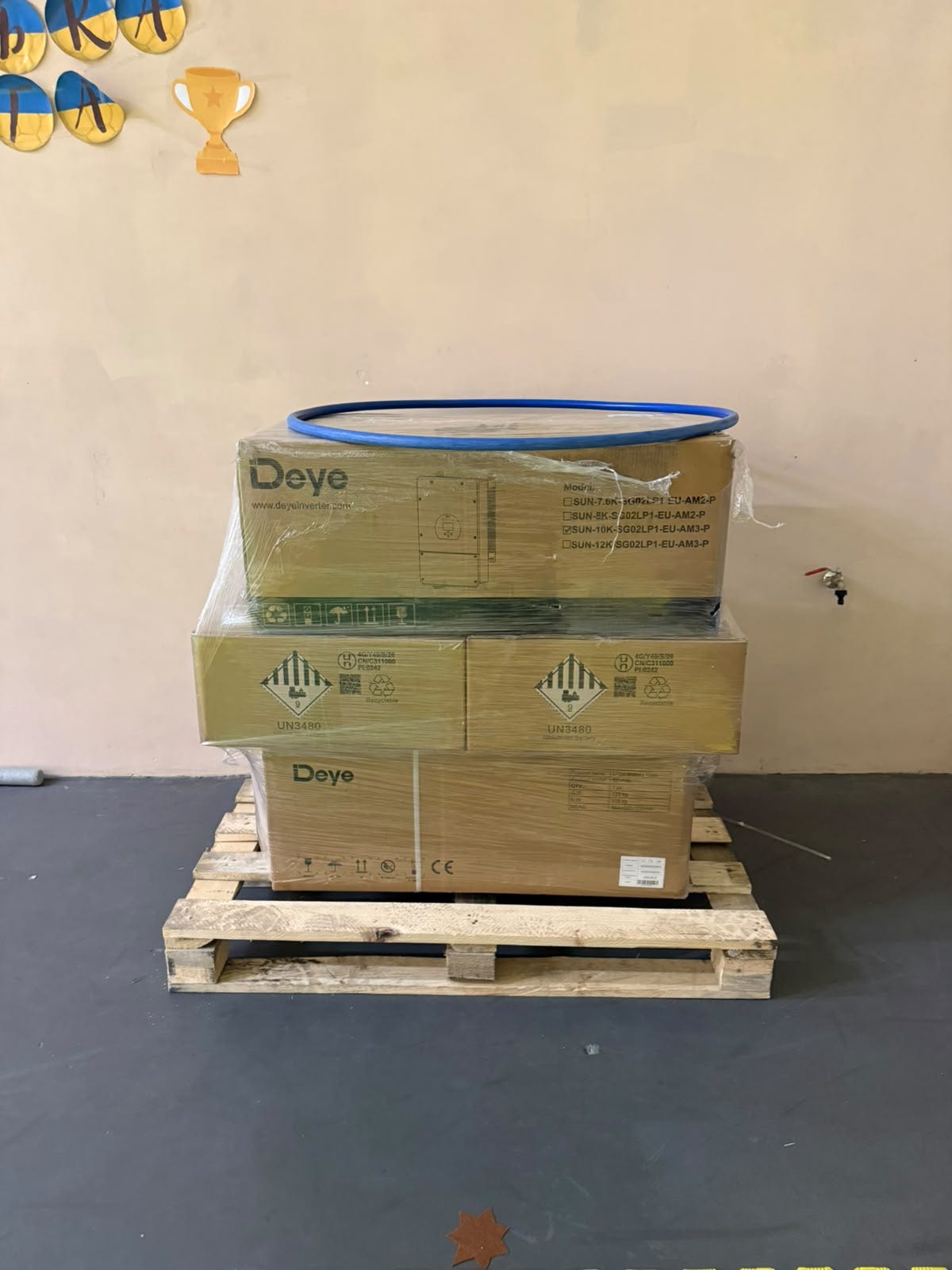
Because the middle school and upper school had no shelter, they had to move to basement storefronts along a commercial strip. These facilities have heating and power issues, and the lower school—which is housed in a converted residence a short ways away—needs an inverter to avoid running a diesel generator constantly, diesel fuel having become prohibitively expensive thanks to the Iran war.
I made an executive decision on the spot to resolve these issues as part of Operation Battery—and instructed the school’s principal to go ahead and contract with her supplier to (1) install and inverter and batteries in the lower school as needed, (2) to install partitions in one of the converted basements so that the students there are not all in one open space (the other basement already has partitions), and (3) to make whatever arrangements are necessary for the basement facilities to be heated. I expect the total cost of the batteries, inverter, and partitions to be in the neighborhood of $10,000. The heating costs are as yet undetermined but are likely to be less than that.
One parent texted me the other day this picture of the inverter and batteries that had arrived and are now awaiting installation:
There are, however, two matters which I would like to help the school with which are not comfortably within Operation Battery, and which I am therefore seeking a Greek Chorus vote before proceeding:
The first is a playground. The lower school right now has no decent facility for the kids to climb on. This is a problem when dealing with kids with hyperactivity issues. An appropriate climbing structure is a matter of about $10,000. I think it’s a no-brainer, but as it’s not power-related, I want to verify that others agree.
The second is tuition support for children who can no longer pay. Enrollment in the school is declining, as families move away from Kyiv ahead of what is expected to be a rough winter of missiles attacks and power and heating outages. Moreover, three students are currently unable to pay tuition, and the school is keeping them enrolled. The result is declining revenue, which is creating financial stress for the institution and threatening jobs of the staff. We can’t do anything about students who withdraw because their families move, but we can create revenue stability for the school with respect to the kids who can no longer pay. It would cost roughly $8,400 to pay for all three students for the remainder of the school year. This would create certainty for the students, revenue stability for the institution, and it would enhance job stability for 23 staff. Again, I don’t think it’s a close call, but it’s not energy related, so I’m submitting it for a vote.
In short, here is the question before the Greek Chorus:
My strong recommendation is “Yes, both.”
Tomorrow’s decision involves Svidomi Media, a Ukrainian news organization that went out of business a year or so ago and which wants to revive itself. Spoiler alert: I want to help.
Tuesday, the estimable Holly Berkley Fletcher and Jonathan Rauch joined me to discuss which congressional investigations the Democrats should focus on and how:
Wednesday, the estimable Mike Feinberg came on to tell us about a counterintelligence win and to discuss different kinds of rich people:
And Wednesday, the estimable Kate from the Greek Chorus had a bunch of interesting, substantive questions to ask. The estimable Holly Berkley Fletcher had a dick-shaped cookie:
Recently On Lawfare
Compiled by the estimable Athena Smith
The Data Is the Target
Sam Bresnick and Emelia Probasco describe how the use of artificial intelligence decision-making support systems (AI DSS) has the potential to make attacks on data more dangerous. Bresnick and Probasco lay out how the use of AI in analytical methods opens up the risk of bad data—which may be increasingly manipulated by foreign countries—and could pressure analysts to make faster decisions. The authors recommend that the U.S. expand its capacity to check for and catch accidents.
Militaries and intelligence agencies will likely consider poisoning or manipulating adversaries’ data going forward. They can hide behind the shields of plausible deniability and the fact that these kinds of interventions are more akin to cyber activities, which take place constantly, rather than kinetic attacks. Without policy, legal, and technical interventions, we may be entering an era of increased risk, as both attackers and defenders could already be operating in a state of permanent uncertainty about whether the pictures their AI-DSS paint reflect reality.
The Invisible Hand Wasn’t Meant to Be Held by the State
Lisa Klaassen details how company stakes are calculated bids by the U.S. government for leverage over strategic industries. Klaassen notes that this approach raises risks because the government is purchasing stakes in the same firms it regulates. She argues that the government can just as easily cut off these companies and that America’s competitive edge derives from fostering market competition with minimal intervention.
While China has spent decades building and controlling its national champions, America’s edge has come from fostering market competition with minimal intervention. The power of the invisible hand is that no one is holding it. “The statesman,” Adam Smith cautioned, who should try to direct private capital, would “assume an authority which could safely be trusted, not only to no single person, but to no council or senate whatever.” Nowhere would this be so dangerous, he warned, “as in the hands of a man who had folly and presumption enough to fancy himself fit to exercise it.”
Enhancing Border Biosecurity in the Age of AI-Enabled Biology
Jay Atanda warns that the U.S. lacks a standard protocol for identifying biological material, leaving it exposed to a web of systemic biosecurity vulnerabilities. Atanda outlines how artificial intelligence (AI)-enabled biological design tools pose novel threats alongside the dangers caused by accidents in research labs or legitimate researchers circumventing rules. He concludes that the U.S. government should move proactively, creating a federal agency and a database to coordinate interdiction and testing.
Repeated incidents of undeclared or illicit biological materials transiting state lines or crossing U.S. borders are warning signals of systemic structural vulnerabilities.
As technological advancements in the life sciences accelerate, the U.S. approach to border biosecurity needs to keep pace, starting with the recognition that relying on chance interdictions is an unsustainable defense posture.
The D.C. Circuit Curbed Pro-executive Panels Before. Is Anthropic’s Case Next?
Samuel Morse argues that the U.S. Court of Appeals for the D.C. Circuit is likely to vacate an earlier panel’s decision upholding the Pentagon’s blacklisting of Anthropic. Morse notes that in three recent cases implicating questions of executive power, the en banc D.C. Circuit reversed 2-1 decisions which favored executive power. He also highlights that a reversal may send the case to the Supreme Court.
Of the 11 active D.C. Circuit judges, seven were appointed by Democratic presidents, and four by Republicans. Given Henderson’s dissent from the panel opinion in this case, observers can surmise that she will vote with the judges on the D.C. Circuit who are more solicitous of views embracing the needs for checks on executive power, rather than a unitary-executive approach to judicial decision-making.
Phew! Some Regulatory Relief for AI Hacks
In the latest edition of the Seriously Risky Business cybersecurity newsletter, Tom Uren analyzes the Trump administration’s AI task force’s decision to encourage regulatory agencies to go easy on organizations targeted by AI cyberattacks. He also describes the Commerce Department’s new AI regulations tightening controls on who can buy AI chips, why as-is these restrictions will likely not keep Nvidia chips out of China’s AI labs, and more.
Finally, governments need to flesh out their practical, AI-specific guidance. We are aware of some high-level advice, a joint Five Eyes cybersecurity agency statement from June and a slightly more detailed Australian Signals Directorate document from July. But “one and done” blog posts from a couple of agencies isn’t enough. We’d hope to see these statements released by more governments, and they should be living documents with advice that changes in real time with the technology.
Does Coercion Work as a Tool of Statecraft?
John R. Deni argues that although economic coercion between allies has historically generated mixed results, there is little consistent evidence that American economic coercion of allies is associated with worsening relationships. Deni notes, however, that coercion will likely provide diminishing returns as targets begin to view the coercing ally more warily.
None of this is to say that Washington’s economic coercion of allies doesn’t engender bad feelings, resentment, or political backlash. Anecdotally, the evidence seems clear that it does. However, this resentment does not appear to be associated with a more fundamental downturn in bilateral relations, foreign policy dealignment, or unwillingness to participate in U.S.-led coalitions.
America’s Second Abandonment of Afghanistan
In the latest edition of Lawfare’s Foreign Policy Essay Series, Liya Khan examines how the cessation of all ongoing and planned U.S. humanitarian assistance for Afghanistan in April 2025 coincided with the Taliban’s intensified gender-based restrictions on women. Khan describes the withdrawal of this aid and how cuts to essential services such as maternal and child healthcare funding have acted as death sentences for women living under the Taliban.
The dissolution of U.S.-funded humanitarian programming in Afghanistan has reinforced the worst effects of the Taliban’s repressive campaign against Afghan women and girls. In addition to the devastating humanitarian fallout, drastic U.S. aid cuts have indirectly empowered the Taliban’s control over Afghanistan.
Inside the Black Market for America’s Artificial Intelligence
Ibrahim Dagher, Kevin Xiao, and Tal Feldman analyze how a network of resellers illegally provides China with access to U.S. artificial intelligence (AI) models. The authors outline the dangers posed by this black market and how it allows Chinese AI to copy U.S. models, provides China access to the world’s foremost AI, and permits malicious actors to circumvent safeguards. They maintain that a combination of prosecution, coordinated awareness, and cyber-sanctions could cripple this market.
American companies have spent years and hundreds of billions of dollars building the world’s best AI and the advanced chips needed to produce it. Right now, a black market takes that frontier intelligence and puts it directly in the hands of malicious actors and adversaries—all for 10 cents on the dollar. It’s time to do something about it.
Is the Counter Ransomware Initiative Keeping Up With Ransomware?
Kate Pundyk, Han Kim, and Rodrigo Pérez-Alonso break down the current status of the Counter Ransomware Initiative (CRI) as overt commitments to the CRI have declined and the scale of ransomware threats has increased. The authors examine how the CRI has evolved, how ransomware—increasingly scaled by artificial intelligence—has outpaced its mitigation, and where CRI stands today.
Ransomware is a transnational threat, and responding effectively requires reliable cross-border coordination. The CRI has made important contributions, but the results remain uncertain. As Canada’s statement at the 2025 CRI summit put it: “[D]espite [CRI’s] best efforts, we are failing to deter or degrade ransomware actors and the dark ecosystem they operate within.”
Congress’s Options for Ending the Iran War
Scott Anderson outlines the opportunities Democrats in Congress may have to pass legislation limiting the Iran War despite objections from the Trump administration. Anderson details why freestanding laws will likely die by veto, so restrictions attached to “must-pass” legislation like the National Defense Authorization Act or the federal budget are more likely capable of delivering restrictions. Anderson also describes how Congress can act without legislation.
For better or worse, control of the 120th Congress does not give Democrats a clear route to ending the Iran War. Any legislation they enact will still be subject to a veto by Trump, and the substantial number of Republican votes needed for an override will likely remain out of reach. Democrats may be able to deter a veto by tying statutory limits and funding cut-offs to must-pass legislation. But to do so, they are going to have to wait for a ripe opportunity—and secure the support of at least four Senate Republicans to pass that legislation in the first place.
Podcasts
On Thursday’s Lawfare Daily, Daniel Byman sits down with John Donnelly to discuss Donnelly’s new book, “Lifeline: The Story of PEPFAR, the Greatest Humanitarian Initiative of Our Time.” The two speak about the President’s Emergency Plan for AIDS Relief (PEPFAR), the Bush administration’s landmark effort to fight AIDS in Africa; the origins of the program; how its architects overcame political and bureaucratic obstacles; and whether the United States still has the ability to change the world for good.
On Rational Security, Scott R. Anderson speaks with Molly Roberts, Anna Bower, and Michael Feinberg to cover the past week’s various outages and communications issues, how the Trump administration may fight back against Democratic oversight efforts in January’s new Congress, the brawl inside the Trump administration following the Nvidia scandal, and more.
On Friday’s Lawfare Daily, Julia Curlee sits down with Chris McGuire to discuss the spy scandal that forced out Nvidia’s Jensen Huang. The two cover how advanced Nvidia chips reached Chinese AI labs through Megaspeed, a Singapore company once run by suspected Chinese intelligence asset Alice Huang, why the Commerce Department never cut off the flow of chips, and what China gained.
On the first episode of “Deep Cuts: The Breaking—and Rebuilding—of American Government,” Scott Anderson and Molly Reynolds discuss the Trump administration’s dismantling of the U.S. Agency for International Development (USAID), what both Americans and the world lost when USAID was destroyed, and what it might mean to build the program back.
On Scaling Laws, Kevin Frazier speaks with Rosemary Lahasky about America’s Workforce Academy, a program through which Meta pays people to receive training within in-demand fields and guarantees them a job upon completion of their curriculum.
Videos
On Friday, Nov. 20, at 4 p.m. ET, I spoke with Molly Roberts, Roger Parloff, and Anna Bower to discuss the latest litigation over Trump administration policies, including updates on Trump’s monuments, the “grand conspiracy” investigation, attacks on law firms, and more.
On Tuesday, Nov. 24, at 10 a.m. ET, I sat down with Michael Feinberg and Julia Curlee to discuss Nvidia’s decision to reinstate Jensen Huang as President, CEO, and board member less than two weeks after he resigned amid allegations involving a suspected Chinese spy.
Today’s #BeastOfTheDay is Fiona the hippo, who died last Thursday after eating a hat:
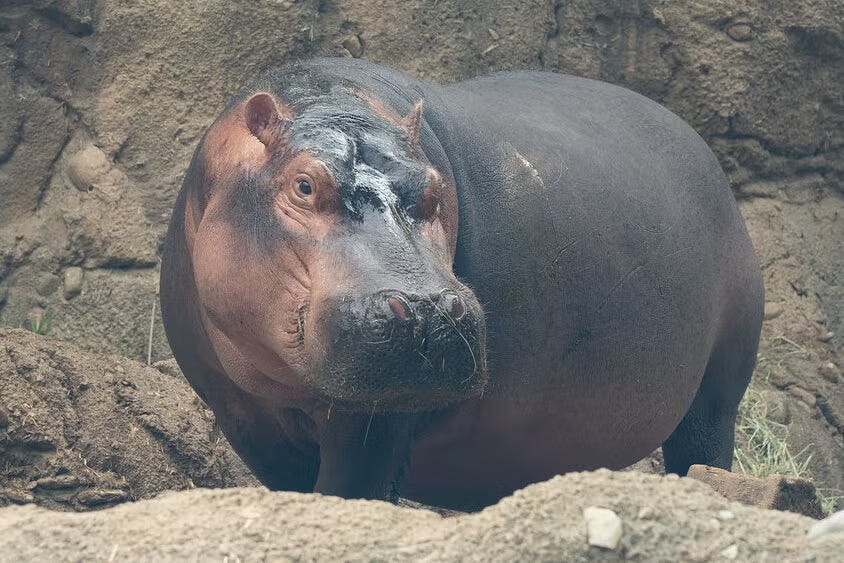
Fiona, the hippopotamus who won over the internet in 2017 as zookeepers shared her progress from premature calf to the princess of the Cincinnati Zoo and Botanical Garden, died on Thursday. She was 9.
The beloved hippo ate a children’s knit hat about two weeks ago after it accidentally fell into her enclosure…A child standing near Fiona’s enclosure tossed a knit hat into the air. The hat was whirled by a ceiling fan through a one-foot gap above the 12-foot-tall viewing window, and it landed in Fiona’s enclosure. An industry standard called protected contact means zoo staff will not enter the enclosures of certain animals when they are present.
Afterward, Fiona was behaving normally until earlier this week when her appetite started to decrease. Surgery isn’t an option for full-grown hippos, said Dr. Gabriella Flacke, a veterinarian at Zoo Miami who consulted on Fiona’s case. The weight of an adult hippo’s abdominal contents is so heavy that it would make healing very challenging, she said. And a hippos’s thick, protective skin would have also posed difficulties for recovery…
Fiona leaves behind her mother, Bibi, and a younger half-brother, Fritz. She was preceded in death by her father, Henry.
In honor of today’s Beast, if a small child offers you a knitted hat to eat, don’t.