


Good Evening:


Duolingo Italian continues to be morbid.
Friday on #DogShirtTV, the estimable Mike Feinberg suggested that we distract him from law enforcement shootings by instead discussing the death of shared American culture. Then the estimable Anastasiia Lapatina checked in from Kyiv to tell us how the Russian bombardment is going. In more uplifting news, there is always Brahms.
Last night, we had the MARA book club. The full video is available for paid subscribers:
The Situation
In yesterday’s “The Situation” column, the estimable Katherine Pompilio and I found lots of points of agreement with the White House’s commemoration of the Jan. 6 insurrection. As this is a rather long column, I’m not going to post the whole thing in this newsletter, but here’s the opening:
The document is designed to enrage people who might have considered Jan. 6 an insurrectionary riot designed to overturn the legitimate results of an election President Trump had lost.
But we refuse to be baited.
Responding with rage, fact-checking, or protesting this document all seem counterproductive. Rage merely gives the president the response he wants. Fact-checking implies that there is some factual mediation to engage in between truth and falsehood—a premise fit only for dilettantes. And protestations? Well, those and a few bucks will get you a cup of coffee.
So in the spirit of national reconciliation and putting the past behind us all, we’ve decided not to call out any of the mendacity in this document but to focus only on our areas of agreement with the White House’s outrageous account of Jan. 6.
As it turns out, we agree with the White House on a lot. We’ve detailed our concurrences in the following annotations:
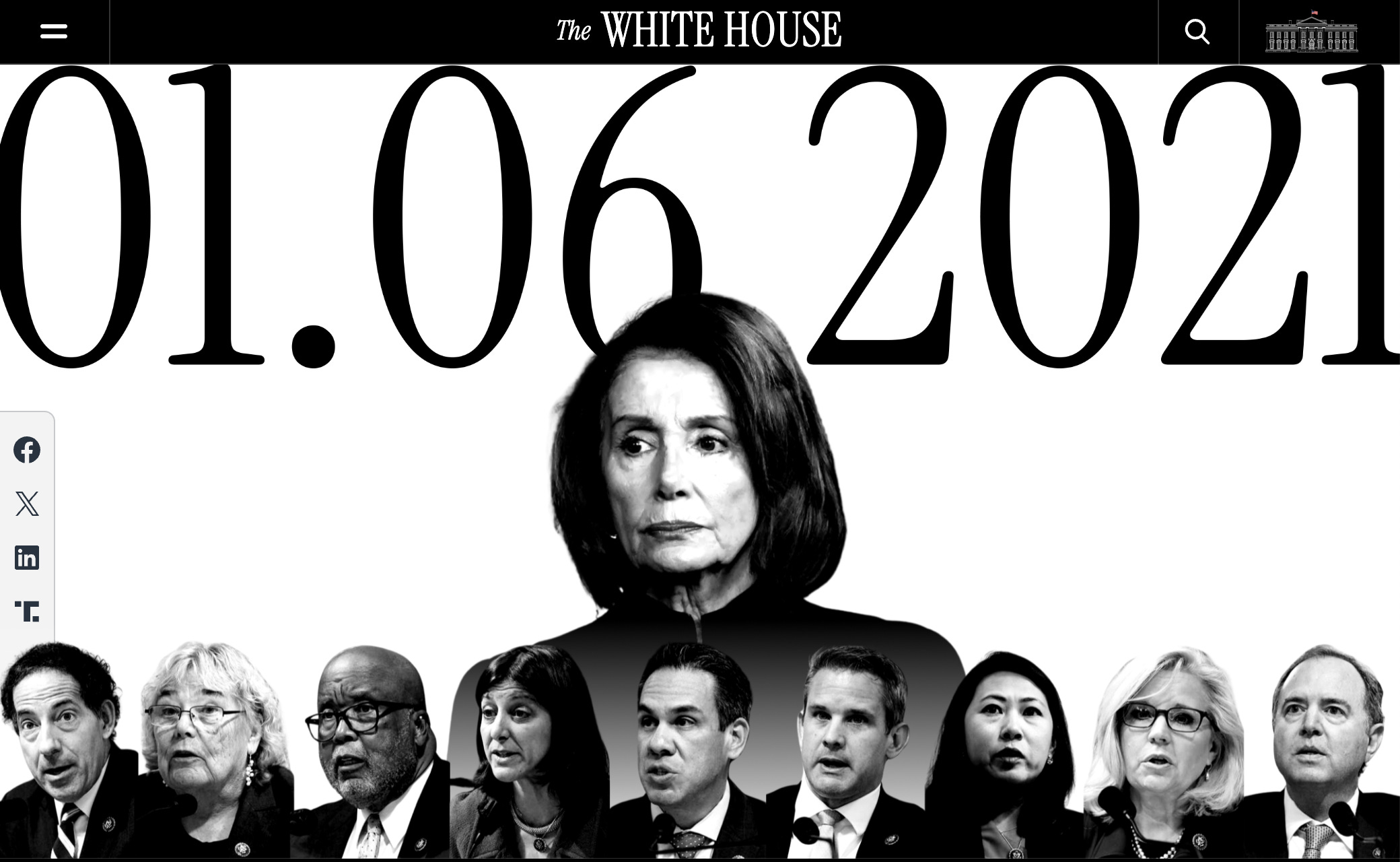
Let’s start with the title: “A Date Which Will Live in Infamy.”
Yep. Seems appropriate. No notes.
Recently On Lawfare
Compiled by the estimable Marissa Wang and the estimable Isabel Arroyo
Inside the Legal Battles Ahead for Nicolás Maduro
Anna Bower, Eric Columbus, Michael Feinberg, Natalie K. Orpett, and Molly Roberts examine the charges facing Venezuelan President Nicolás Maduro and the potential challenges available to Maduro in his defense, including illegal arrest, head of state immunity, and improper venue. The authors assess how each challenge, especially in a case of such unprecedented nature, may test the boundaries of longstanding legal doctrines.
The conflicting interpretations of these events will unfold in the form of criminal litigation. The government’s indictment of Maduro provides the specifics of what it must prove to convict—and for its narrative to prevail. But Maduro can raise a variety of defenses. While each appears to face an uphill battle due to existing case law, there is reason to take the arguments seriously; the unprecedented nature of Maduro’s case may make it distinguishable from other quasi-analogous cases, of which there are few, some non-binding.
In other words, it’s a case ripe for creative legal argumentation. Whether the parties’ litigation strategies lean into that opportunity will play out in court.
The U.K.’s Plan for Electronic Eavesdropping Poses Cybersecurity Risks
Susan Landau, Matt Blaze, and Steven M. Bellovin examine two ways the U.K. government’s vague order requiring Apple to grant them “access to encrypted cloud backups of U.K. citizens” might operate in practice. The authors explain how either approach would raise significant logistical problems and jeopardize the country’s cybersecurity, potentially enabling adversarial actors to gain access to sensitive information.
Indeed, the U.K. appears to be more preoccupied with criminal actors than the People’s Republic of China and other sophisticated, adversarial nation-states. Or so it would seem given the most recent salvo by the U.K. government regarding the use of Apple’s Advanced Data Protection (ADP) for iCloud, a technology that secures data in the cloud so that no one but the user—not Apple, and not law enforcement—has unencrypted access to it. As one of us wrote last year, the Washington Post reported that operating under the Investigatory Powers Act Technical Capability Notice (TCN), “UK security officials demanded that Apple provide access to encrypted iCloud material regardless of the data’s location.”
Congress Must Define ‘Unlawful Order’ Under Military Law
Dan Maurer urges Congress to pass legislation clarifying what constitutes an unlawful order, then provides a series of suggested amendments to the Uniform Code of Military Justice aimed at achieving that clarity.
If Hegseth did say this, it was an order that can only be understood to give “no quarter” to the survivors, an order that is illegal under the laws of armed conflict that the administration claims to follow, and an order that Adm. Bradley should have disobeyed. In light of this reporting, there has never been a more pressing need for definitional clarity of what it means for a command to be “unlawful.” This article suggests six ways in which Congress may exercise its constitutional authority to “make rules for the land and naval forces” by clarifying conditions that make a military order illegal, and what to do when illegality is uncertain. Events are quickly forcing Congress’s hand.
The Fentanyl Executive Order and Domestic Military Deployments
Chris Mirasola argues that President Trump’s Dec. 15 executive order categorizing fentanyl as a weapon of mass destruction does not serve as valid justification for domestic military deployments. Mirasola explains why fentanyl fails to meet the statute enacting Section 282’s definition of a weapon of mass destruction, and suggests that even if it did, the use of the military would still be inappropriate.
As David Del Terzo and James Dunne have helpfully laid out, the executive order directs the defense secretary and attorney general to determine whether the Justice Department requires Department of Defense resources under 10 U.S.C. § 282 to counter the threat posed by fentanyl. Provided a number of criteria are met, § 282 authorizes the Pentagon to assist the Justice Department’s enforcement of three criminal statutes concerning weapons of mass destruction. Crucially, § 282 is also a statutory exception to the Posse Comitatus Act, which generally prohibits the use of the military for domestic law enforcement functions. But under any reasonable interpretation of § 282, it is simply inapplicable to the threat currently posed by fentanyl in the United States.
Lawfare Is Not Enough: The U.S. Needs Legal Statecraft
Peter Dombrowski and Simon Reich examine the role of lawfare in global politics and argue for the U.S. to replace the use of adversarial tactics in international law with a strategy of legal statecraft. The authors explore the implications of the legal statecraft approach in a case study from the South China Sea and make predictions on the U.S.’s future approach to international law.
Treating law only as a weapon thus misjudges its deeper constitutive role in shaping the dynamics of the global system. Legal statecraft fits with a series of long-term campaigns to codify international law, embed norms in the interstate system, create and maintain institutions, and assist in the construction of American legitimacy that endures beyond any single conflict. For the United States, the question is not simply how to deploy law against its foes or how to parry adversaries’ legal maneuvers. Rather, it is whether the United States can commit to a proactive doctrine of legal statecraft: one that uses law to reinforce alliances, address emergent threats, reconstitute elements of global governance, and sustain a rules-based order already under severe duress. In an era of contested power, the choice is whether to keep fighting case-by-case, ad hoc, legal skirmishes or to shape the legal terrain itself as a tool of American influence.
When Misinformation Means the Difference Between Life and Death
Thomas Colley reviews Daniel Silverman’s book, “Seeing Is Disbelieving: Why People Believe Misinformation in War, and When They Know Better,” which examined the relationship between people’s proximity to war zones and their susceptibility to false information. Colley proposes that Silverman’s research can be applied to understanding misinformation patterns during other types of traumatic events, such as pandemics or natural disasters.
The interesting question, and one Silverman’s research invites us all to think about, is what other issues his insights about what makes people believe disinformation and misinformation might apply to. The stakes are high because if we can understand better what motivates people to seek out accurate information, we could mitigate the harm disinformation and misinformation appear to be causing to democracy, social cohesion, and the world’s ability to solve the collective challenges we face. “Seeing Is Disbelieving” has provided an invaluable step in that direction, and its thought-provoking findings deserve to be read widely.
Documents
Tyler McBrien shares President Trump’s executive order directing the withdrawal of all executive departments and agencies from over 60 international organizations and treaties.
Podcasts
On Thursday’s Lawfare Daily, Feinberg and Mary Clare Jalonick discuss Jalonick’s novel “Storm at the Capitol,” an oral history of the Jan. 6 attack on the Capitol. The pair reflect on the lessons that can be learned from that historic day five years later.
On Rational Security, Orpett, Roberts, and I join Scott R. Anderson to discuss the capture of Maduro, the drug- and weapons-related charges that he and First Lady Cilia Flores face in New York, and who exactly is running Venezuela now.
On Friday’s Lawfare Daily, Anna Bower, Eric Columbus, and Michael Feinberg discuss the fatal shooting of Renee Nicole Good by an Immigration and Customs Enforcement agent in Minneapolis this week. The discussion covers the information that was available about the incident, the federal government’s investigation of the shooting, and the legal frameworks governing state prosecutions of federal officers.
Today’s #BeastOfTheDay is the turtle, seen here soliciting a scrub-cuddle.
In honor of today’s Beast, engage in social grooming.