


Good Evening:


Mamacita, the spa-child-care spot in Kyiv that had to close because of power outages, is open again—thanks to the generator we bought for it. If you contributed to the Project Battery fundraiser at any point, you helped make this happen. Thank you.
For those for whom the above is gibberish, see this episode of #DogShirtTV, which explains everything:
And this dog shirt, which explains everything else:

Thursday on #DogShirtTV, the estimable Anna Bower recounted her experience as the lone journalist on the scene at the trial of the century:
Friday on #DogShirtTV, there was no show, because I was sick.
Recently On Lawfare
Compiled by the estimable Marissa Wang
The Right Remedy in the Anthropic Case
Alan Z. Rozenshtein argues that because the Department of Defense unlawfully used national security authorities in its designation and ban of Anthropic as a supply chain risk, the courts should block the action, but should still allow the government to stop contracting with the company through ordinary legal channels.
There is no question about the government’s right to stop doing business with Anthropic. If the Pentagon needs AI models without usage restrictions, it can transition to vendors willing to provide them. The government’s purchasing discretion is broad, and courts should respect it. But that discretion operates through a system Congress built over decades, with competitive bidding requirements, individualized judgments by contracting officers, and—if the government truly believes a vendor cannot be trusted—a debarment process with real procedural protections. When the government bypasses it through an anti-espionage statute repurposed for a contract dispute and a social media post that overrides dozens of agencies’ procurement authority and procedures, the court should push back—not by forcing the government to buy a particular product, but by making it follow the law.
Article I and the Major Questions Doctrine After Learning Resources
David Del Terzo explains how the Supreme Court’s disagreement over the Major Questions Doctrine in Learning Resources, Inc. v. Trump creates uncertainty about the limits of executive power and leaves the door open for the president to invoke his authority over spending, export controls, and foreign investment.
That constraint is real, but it does not dissolve the analytical framework Learning Resources established. The key move, under Gorsuch’s structural approach, is not asking whether an action involves foreign affairs but whether the power being exercised has an independent Article II basis that would survive the statutory delegation failing—and that question yields different answers across the landscape: appropriations diversion cleanest against the government, outbound investment restrictions close behind, civilian export controls more contested, CFIUS review most defensible but thinning as its jurisdiction expands. Whether a future Court majority will adopt Gorsuch’s structural sorting mechanism, or resolve these cases instead through Barrett’s more contextual textualism, or decline to apply the MQD in foreign affairs at all, remains open. Learning Resources did not close these questions—it opened them. Indeed, whether, and in what form, the MQD as articulated by the Learning Resources plurality will survive is, at this point, something of a major question.
The Hegseth Doctrine? Military-Academic De-coupling Competition
J.B. Branch and Allan E. Cameron warns that the Defense Department’s move to cut military education at elite universities will allow foreign adversaries like China to gain a long-term advantage over the U.S. by weakening domestic technological innovation, talent cultivation, and strategic competitiveness.
In continued collaboration, our political perspectives may differ. Our professional backgrounds certainly do. But on this point there is agreement. Curtailing military access to such environments narrows the range of strategic dialogue and weakens, rather than strengthens, American national security.
Fourth Amendment Law by Analogy
Matthew Tokson reviews Orin Kerr’s book, “The Digital Fourth Amendment: Privacy and Policing in Our Online World,” which synthesizes over 40 Fourth Amendment issues into a larger narrative of modern digital privacy law. While Tokson critiques Kerr’s balancing of investigative efficiency over privacy, Tokson still finds Kerr’s proposals to be informative and compelling.
In “The Digital Fourth Amendment,” Kerr illuminates the major Fourth Amendment cases of the past century in an engaging, story-first way. He clarifies the issues that today’s judges are likely to face and explains them in a manner that readers with no prior knowledge of Fourth Amendment law can understand. His individual arguments are thoughtful and often compelling, and the breadth and depth of his knowledge of Fourth Amendment law is unparalleled. “The Digital Fourth Amendment” offers an excellent overview of Fourth Amendment law in the modern world. At the same time, Kerr’s heavy reliance on analogies to the physical world often leads him to under-protect online data, which today may reveal remarkably large portions of people’s lives. The further away new technologies get from traditional Fourth Amendment contexts, the less guidance and constraint the analogical approach provides.
The New War in Afghanistan
In the latest edition of Lawfare’s Foreign Policy Essay series, Alexander Palmer explains why the escalating conflict between Pakistan and the Taliban regime in Afghanistan reflects a critical breakdown of their former proxy relationship. Palmer warns that the crisis could lead to increased regional instability and open up vacuums for terrorist organizations to attempt to fill, creating rippling effects for U.S. national security.
The “open war” between Pakistan and its former Taliban allies could mark the end of Islamabad’s decades-long strategy of supporting militant proxies to exert influence over Afghanistan. Islamabad lacks a clear path to eliminating the threat posed by the TTP, now backed by an Afghan government that was once dependent on Pakistan for its survival. While outside powers like the United States may see the conflict as peripheral, the presence of international terrorist organizations, most notably al-Qaeda and ISKP, means that chaos in the region could lead to attacks outside of it.
Successful War Leaves Iran With One Option, Cyber
In the latest edition of the Seriously Risky Business cybersecurity newsletter, Tom Uren unpacks how Iran may escalate its use of cyber operations to retaliate against the U.S.-Israeli strikes on its soil, Meta’s announcement of the rollback of end-to-end encrypted messages on Instagram, President Trump’s open telephone interviews on the war in Iran, and more.
Unlike nuclear weapons programs, or ballistic missiles, cyber forces don’t require significant industrial capacity and vulnerable supply chains. This makes them far more resilient to conventional attacks. Sure, you can disrupt hacking operations for a short while with bombs, but it is hard to completely destroy capacity without somehow killing all of Iran’s hackers. Cyber forces are the cockroaches of state power.
They’re not just a tool of last resort, though. Investing in cyber capabilities makes sense for Iran.
Documents
Marissa Wang shares the intelligence community’s 2026 Annual Threat Assessment evaluating what it views as the most significant national security threats facing the United States over the coming year.
Podcasts
On Thursday’s Lawfare Daily, Troy Edwards joins Michael Feinberg to discuss why the U.S. may not be adequately prepared to detect acts of retaliation from Iran due to the Trump administration’s weakening of the U.S.’s national security apparatus.
On Rational Security, Scott R. Anderson sits down with Natalie K. Orpett, Ariane Tabatabai, and me to unpack the latest updates in the ongoing war between the U.S., Israel and Iran, including Iran’s blockade of the Strait of Hormuz, the U.S.’s struggle to secure European support, and the U.S. strike on an Iranian elementary school.
On Friday’s Lawfare Daily, Anna Bower and Molly Roberts join me to discuss their recent Lawfare article on Trump’s draft executive order that attempts to assert greater federal control over U.S. elections, what such an executive order could do in practice, and its likelihood of coming to fruition.
Videos
At 4 pm ET on March 20, I sat down with Eric Columbus and Roger Parloff to discuss the ongoing litigation over the Trump administration’s immigration policies, a judge’s order to reinstate employees of the international broadcaster Voice of America, and more.
Today’s #BeastOfTheDay is the leopard seal, seen here trying to teach a useless photographer how to feed himself:



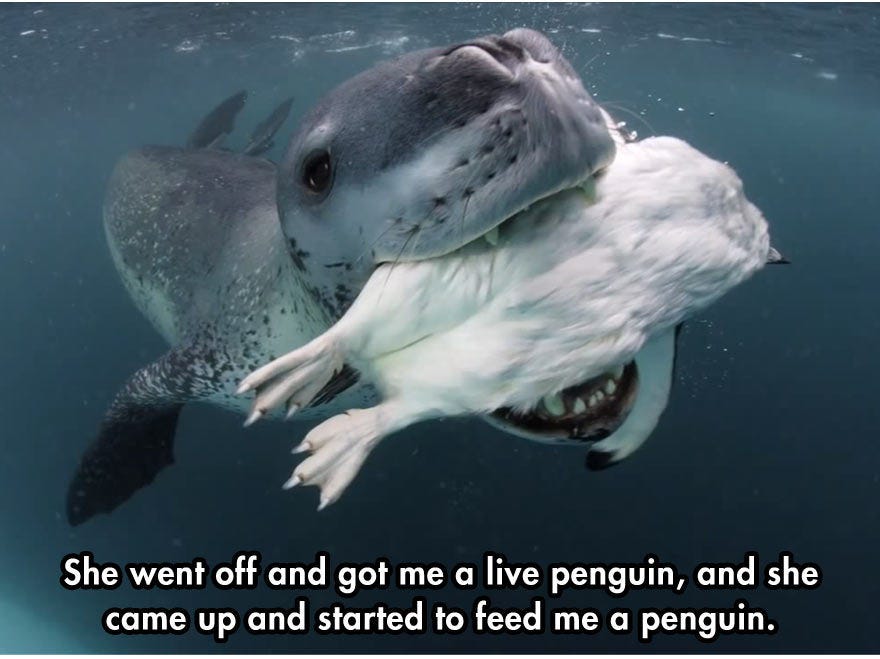
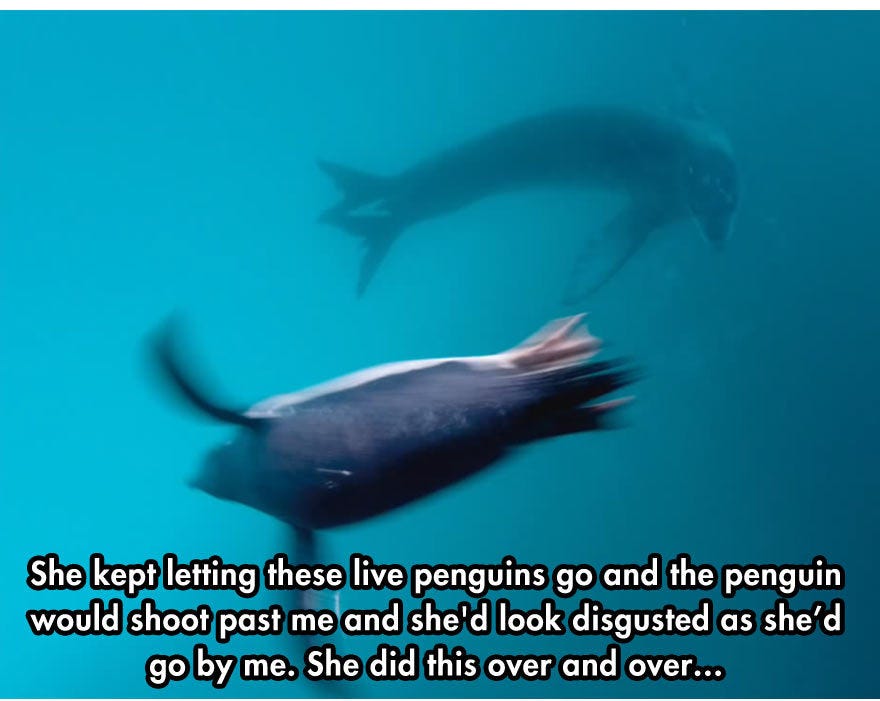

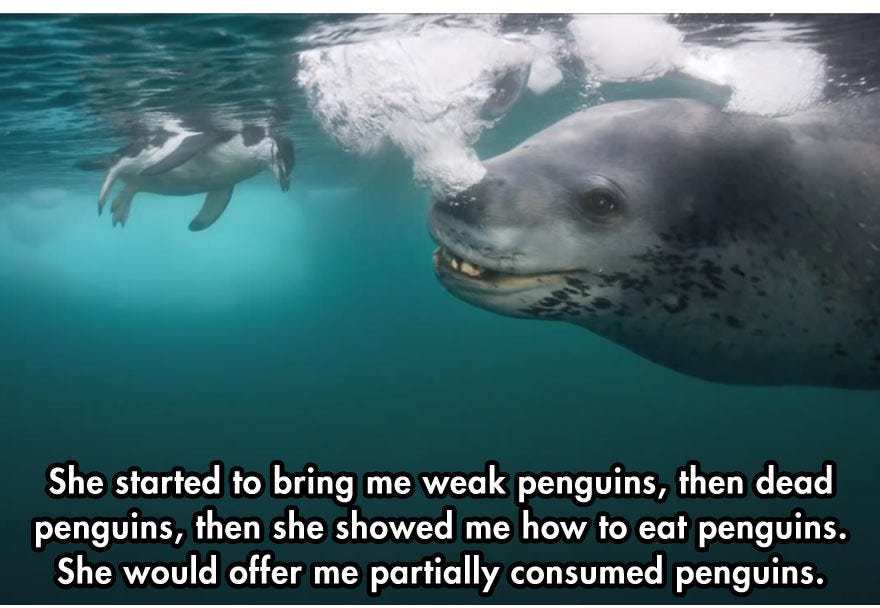

Here’s a video of the photographer, Paul Nicklen, discussing the whole story:
In honor of today’s Beast, donate to a food bank. If the leopard seal can do it, so can you.
The Roundup
My weekly assembly of interesting court opinions, legal filings, and other oddments reflecting on the rule of law in the United States.
Trump v. Miot / Noem v. Doe (Supreme Court) — The Supreme Court granted cert on Monday in two temporary protective status (TPS) cases, one for Haitians and one for Syrians, in which the Trump administration is trying to terminate TPS status for migrants in bulk. The short, unsigned order reads as follows:
Consideration of the application for stay (25A952) presented to Justice Sotomayor and by her referred to the Court is deferred. Consideration of the application for stay (25A999) presented to The Chief Justice and by him referred to the Court is also deferred. The applications are also treated as petitions for a writ of certiorari before judgment (25-1083, 25-1084), and the petitions are granted. The cases are consolidated, and a total of one hour is allotted for oral argument. The cases will be heard during the second week of the April 2026 argument session. Petitioners’ brief on the merits, and any amicus curiae briefs in support or in support of neither party, are to be filed on or before Monday March 30, 2026. Respondents’ briefs on the merits and any amicus curiae briefs in support, are to be filed on or before Monday, April 13, 2026. The reply brief, if any, is to be filed on or before Monday, April 20, 2026.
These cases affect a large number of people. There are thousands of Syrians in the United States on TPS and hundreds of thousands of Haitians. And if the administration succeeds in these efforts, it will likely proceed to try similar actions with respect to other countries. Notably, the court denied the administration’s request for a stay of adverse lower court rulings, which would have allowed the administration to terminate TPS for Haitians and Syrians while the cases progressed. That’s good. But I am not optimistic about how the court will view the merits of the issue when it comes to that later in the Spring. I very much hope to be wrong, but I have a bad feeling about these cases.
New York v. Trump, No. 25-1236 (1st Cir.) — The First Circuit Court of Appeals has mostly affirmed a preliminary injunction on OMB’s big funding freeze from early in the administration.

Chief Judge David Barron summarizes for the court:
These consolidated appeals concern events that trace back to the early weeks of the current Trump Administration. In the first appeal, we confront a challenge to a preliminary injunction that, among other things, blocks a sweeping and unprecedented categorical “freeze” of federal financial assistance that various federal agencies are alleged to have implemented soon after President Trump took office on Jaunary 20, 2025. IN the other appeal, we confront a challenge to orders that enforce the preliminary injunction against one of those agencies—the Federal Emergency Management Agency (FEMA)—for failing to comply with it. We affirm the preliminary injunction in part and vacate it in part. We affirm the orders enforcing the preliminary injunction against FEMA in full.
The First Circuit ruling did give the administration a win on one point: The injunction is vacated “to the extent that it requires the Agency Defendants to make ‘disbursements to the States on awarded grants’ and ‘executed contracts.’”
