


Good Afternoon:
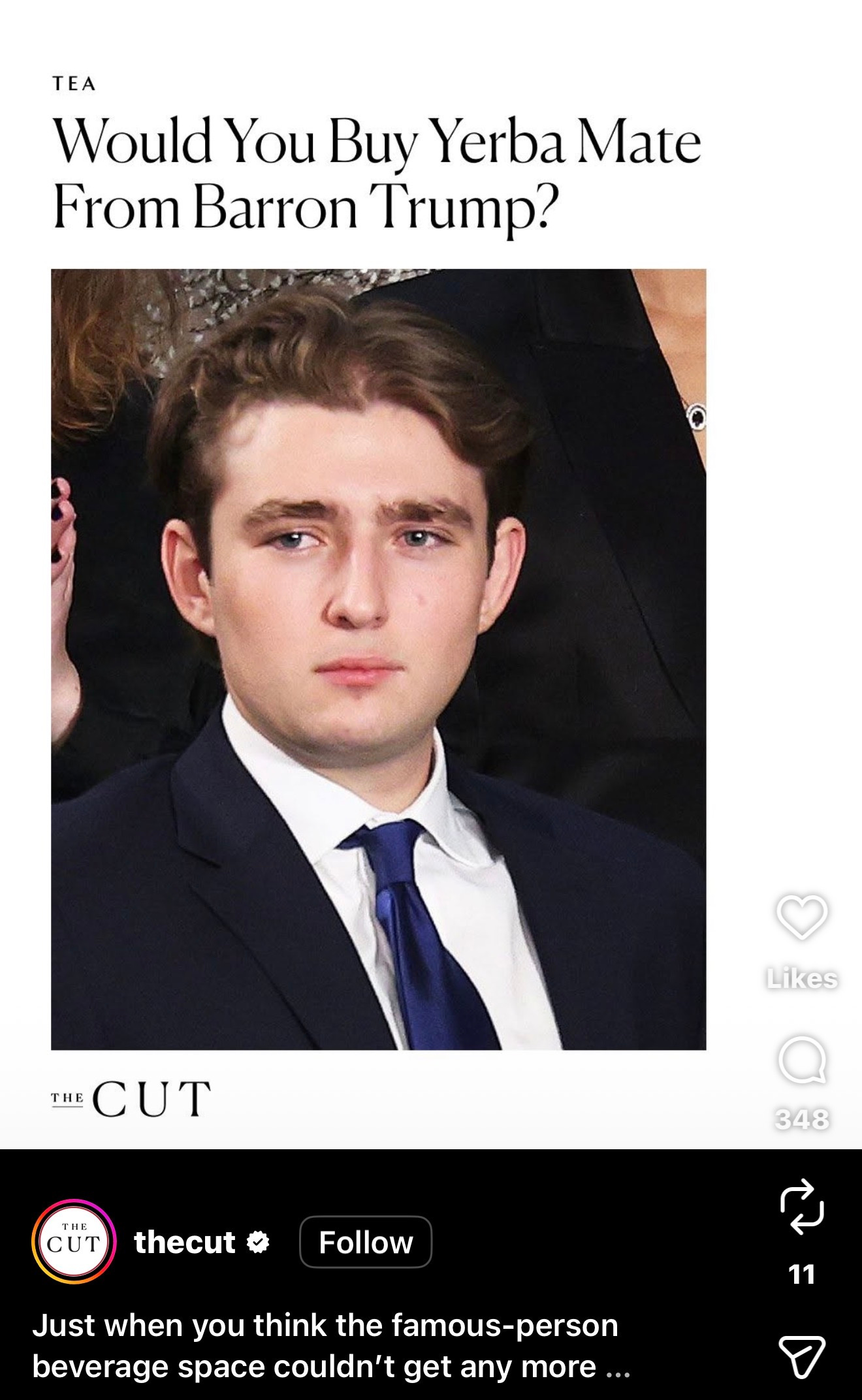
It’s the mother of all stupid headline questions, submitted by an alert and most estimable reader.
Thursday on #DogShirtTV, the estimable Ari Tabatabai came on the show to discuss the Iran ceasefire and America’s great victory in the war on we’re not quite sure what.
Friday on #DogShirtTV, do dogs belong in restaurants? Do dogs belong in offices? Do dogs belong in the Justice Department? The dogs finally star on the show.
The Next MARA Book Club Meeting
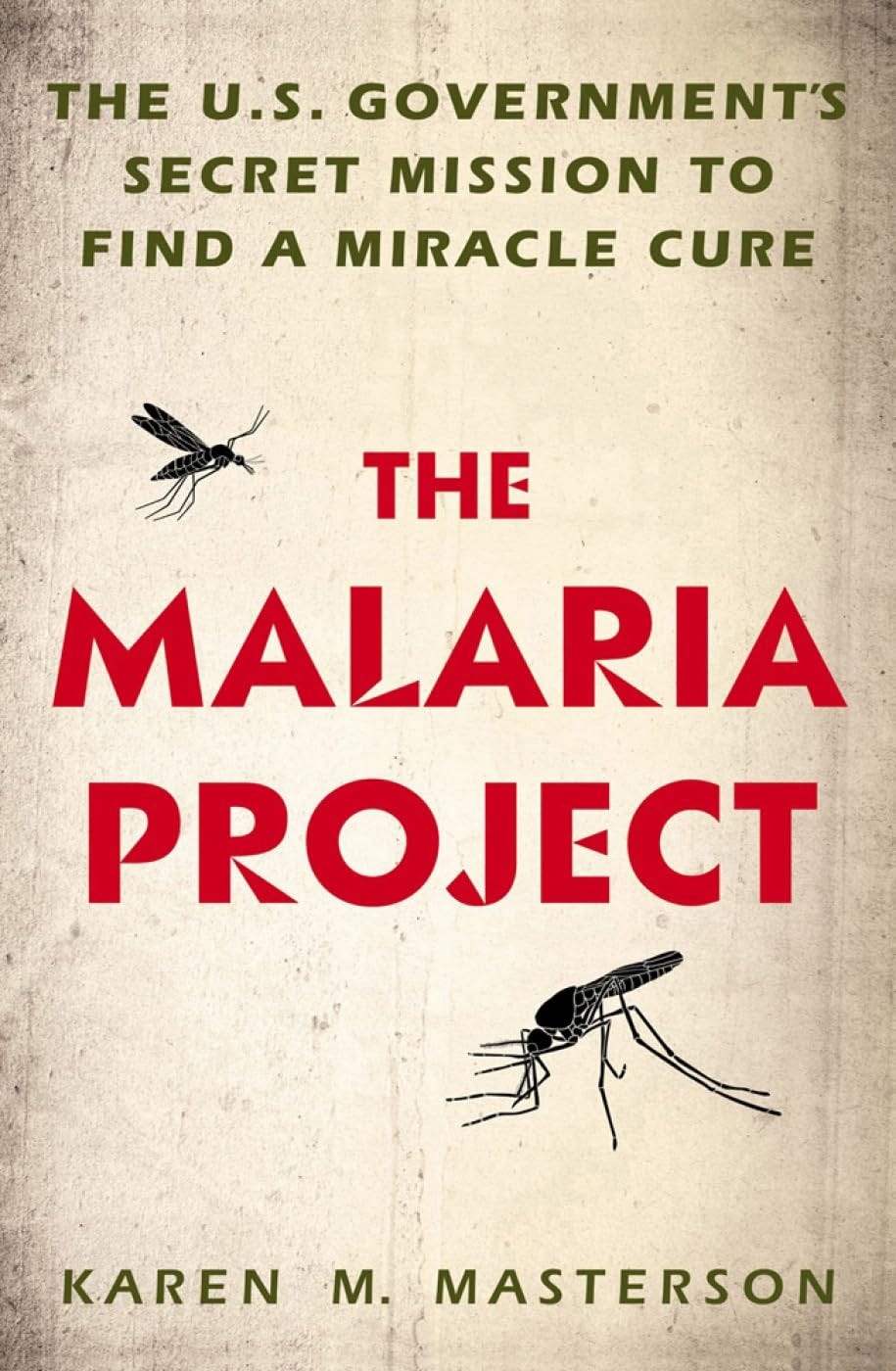
The next meeting of the Make America Read Again (MARA) Book Club will take place on May 3 at 5:00 pm. Our guest will be Karen Masterson, author of “The Malaria Project: The U.S. Government’s Secret Mission to Find a Miracle Cure.” She has chosen as her fiction win pairing Albert Camus’s “The Plague.”
A reminder that MARA Book Club meetings are for paid subscribers only. Not one? You can do something about that right now—and you should.
Recently On Lawfare
Compiled by the estimable Marissa Wang
The Code Is Not the Law: Why Claude’s Constitution Misleads
Lisa Klaassen and Ralph Schroeder explain why Anthropic’s novel “constitution” for its artificial intelligence (AI) model Claude fails to lend constitutional or moral legitimacy to Claude in practice. Klaassen and Schroeder criticize the document for anthropomorphizing the AI tool, borrowing the language of public law for a private product, and obscuring the contractual obligations that may usurp the AI’s stated principals.
What Anthropic offers is not constitutional legitimacy so much as constitutional style: the jargon of higher principles, founding authority, and ordered power without the corresponding institutional guarantees that make those ideas real. There is no external contestation, enforceable body of rights, or shared mechanism of rule. The company remains, in the end, the author, interpreter, and arbiter of the principles by which it claims to be bound. That is why the document is worth reading closely. It tells us less about the moral personality of Claude than about the kind of authority Anthropic believes it should be able to wield over systems that may soon become difficult for other institutions, and the public at large, to do without.
Grammarly Lawsuit Shows Existing Laws Can Combat Deepfakes
Jennifer E. Rothman argues that the ongoing lawsuit against Grammarly for its allegedly unauthorized use of journalists’ and scholars’ writing style does not necessitate new legislation to protect people’s likeness from abuse by AI. Rather, Rothman suggests that the legal dispute reveals how existing federal and state privacy laws can strengthen the plaintiffs’ case against the AI tool.
In early March, Wired reported that the AI-powered software Grammarly, which promises its software tool will help guide and generate your writing, offered users the ability to edit text “in the style” of identifiable journalists and scholars without their consent, and allegedly singling out specific people by name, thereby signaling their participation or endorsement of the service. What might once have seemed like a parlor trick has now become the basis for litigation, raising foundational questions about identity, attribution, and control in an age of generative-AI authorship. One of the key tools to combat such overreaching impersonations is the right of publicity—a legal doctrine that gives individuals control over the use of their name, likeness, voice, and other recognizable aspects of identity when used without authorization by others. The right is governed primarily by state law.
White House AI Framework Proposes Industry-Friendly Legislation
Jakub Kraus unpacks the White House’s newly released national framework for artificial intelligence (AI) and what it means for the future of AI legislation, including the preemption of “cumbersome” state AI laws, limits on liability for developers, and an overall aversion to heavy federal regulations.
On March 20, the White House released a “comprehensive” national framework for artificial intelligence (AI), three months after calling for legislative recommendations on the technology in an executive order that sought to curb certain state AI laws. The framework has already received support from influential Republicans in Congress, including House Speaker Mike Johnson (R-La.) and Sen. Ted Cruz (R-Texas), who will likely work closely with the White House to advance AI legislation aligned with the framework. On the other side of the aisle, Sen. Maria Cantwell (D-Wash.), who serves alongside Cruz as ranking member of the Senate’s commerce committee, said the framework “identifies key areas to address.” Thus, the framework offers a fairly clear sketch of which types of AI policy could become U.S. law before the 2026 midterm elections.
Non-State Entities and National Security
David S. Kris examines how the increased implementation of non-state entities in national security operations exposes a governance gap, in which private actors lack accountability while state controls risk overreach. Kris argues that the existing frameworks for national security governance are outdated and require new safeguards to balance power between states and non-state actors.
In March, the Defense Department designated Anthropic a supply chain risk, sparking legal controversy. The designation came after Anthropic prohibited the use of its artificial intelligence (AI) model, Claude, for “mass domestic surveillance” and for “fully autonomous weapons.”
Apart from its fascinating particulars, this ongoing dispute reveals a fundamental shift: Non-state entities (NSEs) of various kinds—corporations, universities, and individuals—are becoming much more important for national security. These entities are increasingly enabling, and sometimes limiting, defense and intelligence activity. Unsurprisingly, states are pushing back, treating NSEs as rival geopolitical actors, and using a wide array of carrots and sticks to dominate them. Both trends—NSEs limiting states, and states dominating NSEs—stress existing frameworks for national security governance. Those frameworks were not designed for the current geopolitical reality and would benefit from a systematic review.
American Diplomats to Fight Propaganda … on X
In the latest edition of the Seriously Risky Business cybersecurity newsletter, Tom Uren discusses the current state of the U.S.’s ability to defend against propaganda and disinformation from foreign actors, Salt Typhoon’s recent attacks on U.S. intercept and surveillance systems, and more.
In the short term, reinstating the State Department’s counter-propaganda programs won’t do much to turn around America’s messaging problems. Disinformation and propaganda, however, is a game that America’s adversaries are playing for the long term.
The State Department has known about this problem for a while. In October 2025, Intelligence Online reported that the department was thinking about reactivating some of its counter-propaganda offices. At some point, we expect the U.S. will start, once again, to actively counter these campaigns in an organized, centralized, and more effective way.
Podcasts
On Lawfare Daily, Molly Roberts sits down with Katherine Pompilio to discuss Lawfare’s new interactive tracker documenting instances of government non-compliance with federal court orders in immigration habeas cases.
On Rational Security, Daniel Byman, Tyler McBrien, and Natalie K. Orpett join Scott R. Anderson to unpack the week’s biggest Iran-focused news stories, including the newly announced two-week ceasefire between the U.S. and Iran, President Trump’s use of increasingly outlandish rhetoric, and the state of U.S. public opinion on the conflict.
On Scaling Laws, Rep. Nick Begich (R-Alaska) joins Kevin Frazier to unpack the current state of AI policy in Congress, Alaska’s role as a leader in developing AI infrastructure, and the use of AI in Rep. Begich’s office operations.
Videos
At 4 pm ET on April 10, I sat down with Eric Columbus, Molly Roberts, and Roger Parloff to discuss the D.C. Circuit’s denial of Anthropic’s motion to stay its supply chain designation, an update in the legal challenge to the attempted deportation of Kilmar Abrego Garcia, and more.
Today’s #BeastOfTheDay is the anteater, seen here playing a spirited game of “Got Your Leg:”
In honor of today’s Beast, trip your coworker.
The Rule O’ Law Roundup: Week of April 12, 2026
It’s been a busy week. Here are the major developments.
AFSCME v. Social Security Administration (4th Cir. 25-1411, en banc)
The en banc Fourth Circuit Court of Appeals voted 9-to-6 on April 10 to vacate the preliminary injunction that had restricted DOGE access to Social Security Administration data. The controlling opinion holds:
we hold that plaintiffs did not show—based on the record before the district court when it entered this preliminary injunction—that they were “likely to suffer irreparable harm in the absence of preliminary relief.” Winter, 555 U.S. at 20 (emphasis added). We thus vacate the preliminary injunction without addressing whether plaintiffs satisfy the remaining three Winter factors.
The order granting a preliminary injunction is vacated and the case is returned to the district court for further proceedings consistent with this opinion.
The opinion has no practical effect because the Supreme Court had already stayed the lower court injunction. The en banc court is somewhat fractured on matter and the reasons for its action. Here is its own account of the breakdown:
Before DIAZ, Chief Judge, and WILKINSON, NIEMEYER, KING, GREGORY, AGEE, WYNN, THACKER, HARRIS, RICHARDSON, QUATTLEBAUM, RUSHING, HEYTENS, BENJAMIN, and BERNER, Circuit Judges.
Preliminary injunction vacated by published opinion. Judge Heytens announced the judgment of the court and delivered the opinion of the court with respect to Parts I, II, and III, which Chief Judge Diaz and Judges King, Gregory, Wynn, Thacker, Harris, Benjamin, and Berner joined, and an opinion with respect to Part IV, which Chief Judge Diaz and USCA4 Appeal: 25-1411 Doc: 75 Filed: 04/10/2026 Pg: 1 of 88 2 Judge Harris joined. Judge Wilkinson wrote an opinion concurring in the judgment, which Judges Niemeyer, Agee, and Rushing joined. Judge Richardson wrote an opinion concurring in the judgment, which Judges Wilkinson, Niemeyer, Agee, Quattlebaum, and Rushing joined. Judge Quattlebaum wrote an opinion concurring in the judgment, which Judges Richardson and Rushing joined. Judge King wrote an opinion concurring in part, dissenting in part, and dissenting from the judgment, which Judges Gregory, Wynn, Thacker, Benjamin, and Berner joined. Judge Wynn wrote an opinion, which Judges King, Thacker, Benjamin, and Berner joined.
New York Times Co. v. Department of Defense (D.D.C. 1:25-cv-04218, Senior Judge Paul L. Friedman)
On April 9—eleven days after a compliance hearing at which Judge Friedman demanded to know “Is it Catch-22? Is it Kafka? What’s going on here?”—the judge issued his written ruling. He found the Pentagon in violation of his March 20 order on two independent grounds: the Interim Policy was the same unconstitutional prohibition in new words, and the closure of the Correspondents’ Corridor “and its ban on credentialed journalists traveling unescorted through the Pentagon are not security measures or efforts to make good on prior commitments but rather transparent attempts to negate the impact of this Court’s Order”:
The Court cannot conclude this Opinion without noting once again what this case is really about: the attempt by the Secretary of Defense to dictate the information received by the American people, to control the message so that the public hears and sees only what the Secretary and the Trump Administration want them to hear and see. The Constitution demands better. The American public demands better, too.
The opinion concludes: “Suppression of political speech is the mark of an autocracy, not a democracy—as the Framers recognized when they crafted the First Amendment.” Judge Friedman ordered a sworn Pentagon compliance declaration by April 16. The Pentagon is appealing to the D.C. Circuit.
Here is the opinion.
Here is the docket.
Here’s the Lawfare’s hearing dispatch by the estimable Molly Roberts.