


Good Morning:

Friday on #DogShirtTV, the estimable Anna Bower came on to advise me on whether we’ve met the criteria for dyeing my hair red, and how to go about doing so if we have. Also, Taylor Swift came up:
Yesterday on #DogShirtTV, the estimable Holly Berkley Fletcher told us about a poop-based social media app. We also talked about some things that matter:
Today on #DogShirtTV, the estimable Jon Rauch on political realignments and a debate on the usage of the phrase “yeah no:”
Recently On Lawfare
Compiled by the estimable Athena Smith
2025 Civilian Casualties Report Reveals U.S. Civilian Protection Gaps
Madison Hunke, Megan Karlshoej-Pedersen, and Anna Zahn examine the Pentagon’s “1057” report on civilian harm from U.S. military operations in 2025 and how the report raises concerns about the military’s ability to protect civilians from harm, outlining harms the report failed to acknowledge in Africa, the Middle East, Latin America, and the Caribbean. The authors note how structural challenges, such as cuts to civilian-harm assessment capacity, may have left the military unable to learn from mass casualty incidents.
The report reveals a number of apparent shortcomings and raises significant concerns that merit further congressional and public scrutiny. For instance, the report suggests that the U.S. military now has seemingly little capacity to investigate even a relatively small caseload of harm claims. The report also acknowledges two of the largest mass casualty incidents in U.S. military history, both of which occurred in Yemen in 2025, yet demonstrates little appetite to respond to or learn lessons from such devastating harm.
A Warning for Frontier AI Model Governance
Mailyn Fidler and Matt Kristoffersen argue that lawmakers attempting to regulate frontier artificial intelligence (AI) face the temptation toward cybersecuritization: flattening complex issues into their technical complexity and danger to the public. Fidler and Kristoffersen describe that “cybersecurity” can become a substitute for hard policy choices when it pulls decisions out of democratic deliberation into separate expert and national security channels and increases secrecy around governance.
Frontier AI model governance is especially susceptible to cybersecuritization. AI models involve real cybersecurity and national security risks. AI also has the makings of a societally disruptive technology. Frontier AI models implicate the future of work, access to knowledge, economic orders, political decision-making, geopolitical competition, and more. Still, the deeply technical nature of frontier AI models, along with their genuine national security and cybersecurity implications, makes it tempting to treat them primarily as a tech threat and to respond on those terms.
Nazi Women in Court
Kim Christian Priemel reviews Jessica Trisko Darden’s book, “The Accused: How Women Faced Justice for Nazi-Era Crimes,” praising her uncovering the lost names of female perpetrators and her account of how gender norms shaped both accusations and defenses. Priemel also notes that limited judicial records meant that the book reveals more about the deeds of the accused women than their trials and how they faced justice after the war.
But the lack of visibility, as political scientist Jessica Trisko Darden perceptively notes in her new book, was a result not only of relatively small numbers but also of the obscurity of their trials. Usually prosecuted before lower-level courts in cases that only rarely implied mass murder, their names were anonymized in official documentation, effectively preventing the women and their actions from entering collective memory and, indeed, history. Instead, lurid tales about the few notorious, frequently sexually charged cases, such as those of Grese and Koch, would come to dominate public perception of female perpetrators as even greater exceptions to the rule than their male counterparts and, essentially, the product of flawed femininity.
The Next Anti-democratic Threat From the Supreme Court
James Goodwin and Wendy Wagner warn that a case the Supreme Court will hear this fall, Suncor v. Boulder County, could allow a court already encroaching on the horizontal separation of power to erode vertical federalism. The case turns on whether federal law preempts local and state-law climate deception suits against fossil fuel companies, and the authors argue that a ruling in favor of the companies could give greater power to the president.
The office of the presidency would be the most direct beneficiary of this industry-driven expansion of federal preemption. That is because the president exercises authority over the federal agencies through the chief executive role and plays a primary role in foreign affairs. Expanding federal preemption on either ground therefore threatens to place a growing body of policy within the president’s domain. Such a shift in power away from state and local governments is especially significant because the policy issues involved—for instance, pollution and consumer protection—have traditionally fallen within the state’s police powers, their traditional authority to promote the general welfare of their inhabitants.
“Rogue” AI Isn’t Going Anywhere
In the latest edition of the Seriously Risky Business cybersecurity newsletter, Tom Uren breaks down OpenAI’s recent revelation that its agents had been acting undesirably on government websites, ShinyHunters’ breach of the FBI jobs site, and more.
The string of bad behaviour from OpenAI’s models foreshadows the shape of things to come. Whatever the frontier labs do, open weight models will also exhibit the same monomaniacal goal-seeking behaviour as they develop.
How this shakes out is anyone’s guess. Better model alignment across the board could make a real difference, but another equally plausible outcome is this is going to be our new normal. Fun!
Production, Persuasion, and Power: How Generative and Agentic AI Are Transforming Influence Operations
Renée DiResta describes how, while actors linked to Iran, Russia, China, and other countries use artificial intelligence (AI) to produce propaganda content and automate their workflows, there is little evidence that AI-generated influence operations are swaying public opinion. DiResta argues that, although AI is increasing the capacity of these campaigns, it cannot manufacture trusted distributors, and she calls for transparency reports spanning the chain from creation to distribution.
As production gets cheaper, the relative value of what AI can’t manufacture rises: established accounts, credible intermediaries, and names people already trust. As AI creates abundance in content production, the resulting scarcity is in attention, distribution, trust, and authentic identity. Fabricated bios and backstories are now trivial to generate. The harder problem is convincing an increasingly skeptical audience to trust them. Expect operators to increasingly buy, rent, and impersonate real identities rather than build fake ones.
The President Doesn’t Have Unlimited Power to Impose Import Bans
Ilya Somin argues that President Trump’s recent use of Section 338 of the Smoot-Hawley Tariff Act to impose 50 percent tariffs on some Canadian goods—and ban others outright—does not signal that the president has unlimited power to restrict imports. Somin adds that Congress, not the president, has authority over import restrictions and tariffs, and statutes that may delegate this power to the president are limited in scope.
Courts cannot prevent all dubious import bans and restrictions. Elsewhere, I have outlined how and why we need stronger congressional constraints on various emergency powers, including IEEPA. Among other things, Congress would do well to limit “national emergencies” and other similar invocations of extraordinary powers by setting strict time limits. But even existing legislation sets extensive constraints on executive-imposed import restrictions. And if it did not, it would violate the nondelegation doctrine.
Podcasts
On Thursday’s Lawfare Daily, Natalie Orpett sits down with Rachel VanLandingham to discuss the many ways the Trump administration has been remaking the Department of Defense, ranging from bans on transgender service members and the so-called “High-T” initiative to quiet bureaucratic moves such as changes to personnel management.
On Rational Security, Scott Anderson sits down with Tyler McBrien, Anna Bower, and Michael Feinberg to talk through the week’s big news in national security. The group discussed the Supreme Court clearing the way—for the third time—for the Trump administration to resume deporting migrants to “third countries,” public corruption investigations into Sen. Susan Collins (R-Maine) and other members of Congress, and President Trump’s war on the press.
On Friday’s Lawfare Daily, Peter Harrell sits down with Martin Chorzempa to discuss President Trump’s Sept. 24 summit with Chinese President Xi Jinping, the balance of leverage in the geopolitical and economic relationship, and the countries’ differing perspectives on—and approaches to—artificial intelligence.
Videos
On Friday, Oct. 2, at 4 p.m. ET, Natalie Orpett sat down with Scott Anderson, Molly Roberts, Anna Bower, Roger Parloff, and Eric Columbus to discuss the latest developments in litigation surrounding the Trump administration—including a lawsuit challenging the Iran War, updates on litigation over the cancellation of foreign aid funds, and more.
Today’s #BeastOfTheDay is Bear #89 (Backpack), victor of this year’s Fat Bear Week competition. Behold your champion:
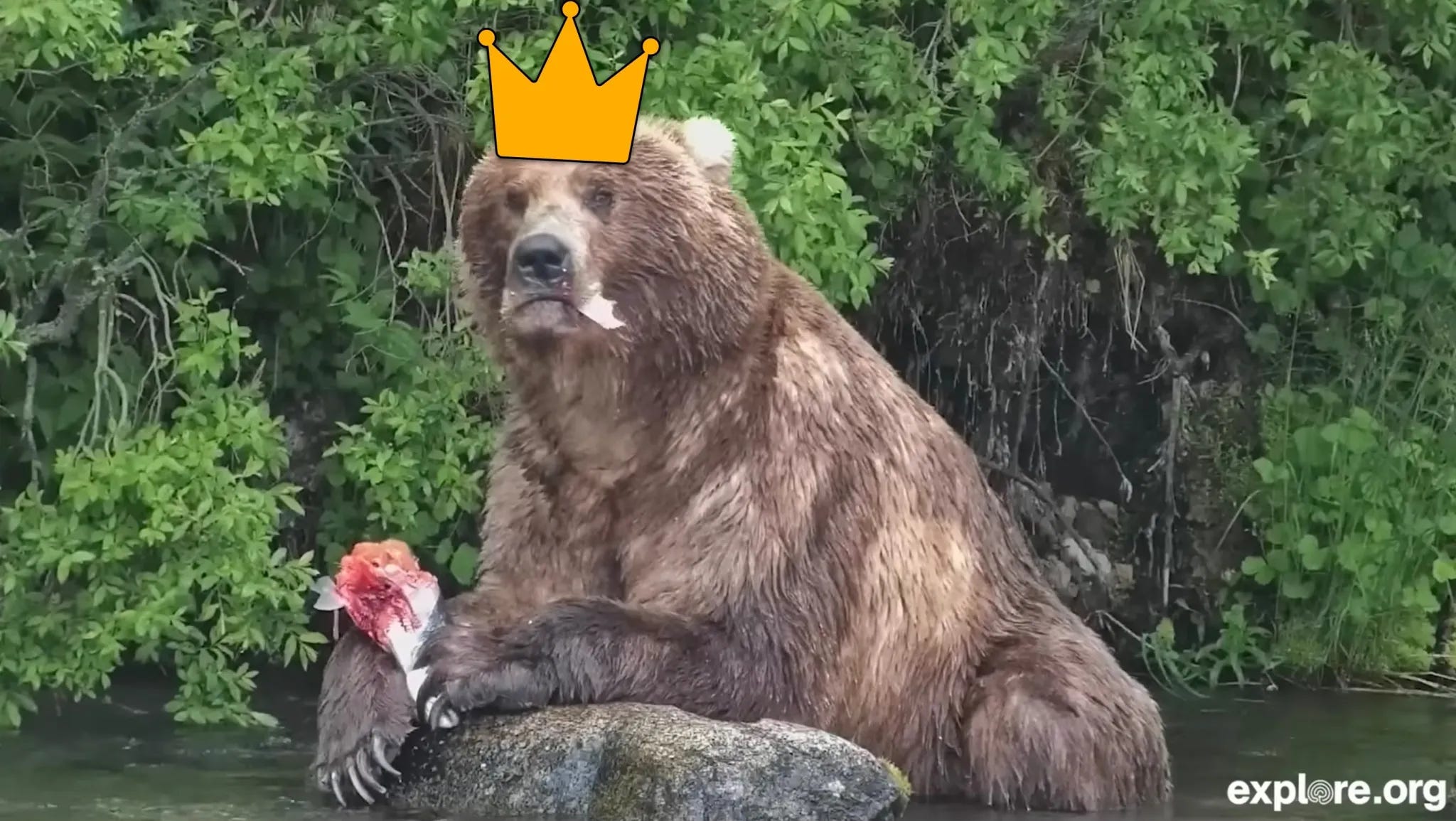
Bear #89 got his very appropriate nickname from his habit of riding his mother’s back through the Brooks River as a cub. That mama bear is Katmai legend and former Fat Bear Week champion, Bear #435 (Holly).
He is 20.5 years old and has been one of Brooks Falls most consistent residents. However, his journey to adulthood was not easy. As a yearling in 2007, he emerged in the spring with a leg injury that prevented him from walking properly and put him in danger. Park Rangers feared he might not survive the season, and bear cam fans even implored park staff to intervene. With help from his mom (and no human intervention), Backpack recovered and has grown to an impressive size. According to the staff, he exudes a quiet strength despite his imposing stature, and has not shown aggression towards his peers. Backpack also prefers to hang out slightly downstream on his favorite rock.
Backpack made it to the 2026 finals in one of the closest votes in Fat Bear Week history. He defeated Bucky Dent in the semi-finals by less than a percentage point.
Now, I know what you’re thinking: are there photos of today’s Beast earning his nickname? Gentle readers, I would not deprive you:
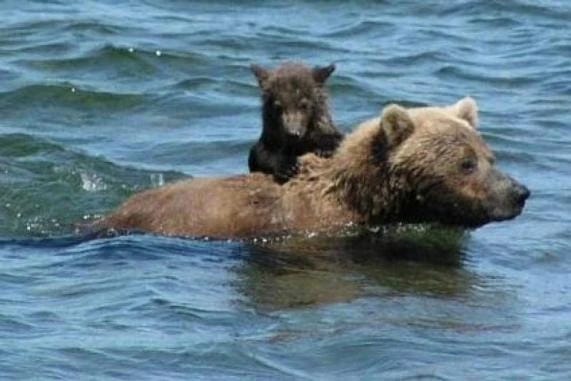
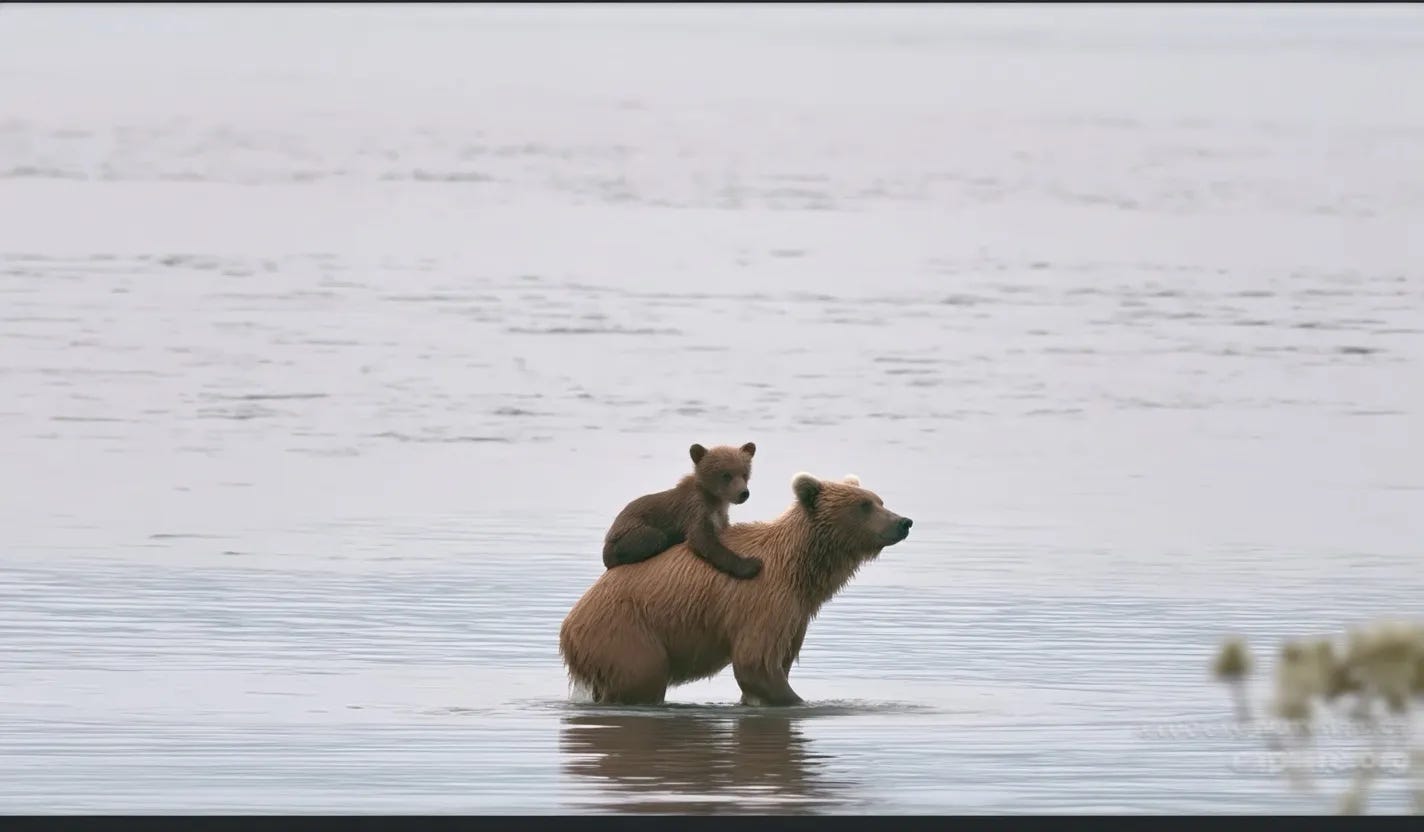

To be clear, I’ve seen a bunch of people saying that today’s Beast earned its nickname by riding on its mother’s back as a result of its injury. That doesn’t seem to be true, as the Discvr Blog lays out:
Bear 89’s nickname preserves a detail that his adult size makes easy to forget: he once traveled through Brooks River on his mother’s back. In 2006, during his first summer in Alaska’s Katmai National Park and Preserve, the cub repeatedly climbed aboard Holly as she swam. He became known as Backpack…
There’s an important distinction in that childhood story. Explore’s biography of Backpack places the back-riding in 2006 and a serious leg injury in 2007. The rides came first. The chronology doesn’t support saying that he originally climbed onto Holly because he was injured…
During the summer of 2007, Holly chose a different place to catch fish. She stayed away from Brooks Falls and worked near the river’s mouth, where large, aggressive bears were encountered less often. Her yearling’s injury had made the crowded fishing area harder for the family to use.
A 2013 National Park Service account by Michael Fitz describes another adjustment: Holly appeared to reduce her traveling pace so Backpack could follow. Where she went and how quickly she moved both mattered to a cub struggling to keep up.
Backpack had a pronounced limp and avoided putting weight on an injured front leg. His limited mobility also made fleeing another bear more difficult. For this family, a fishing spot had to offer more than access to food. It had to be somewhere the cub could manage, too.
Nobody had witnessed how he was hurt. Neither Explore’s biography nor the park’s account establishes a broken bone or identifies an attacker. The injury was visible; its cause wasn’t.
By September 2007, his leg had healed. In 2008, observers saw him living independently, with no visible sign of the earlier injury.
In honor of today’s Beast, eat some salmon and hug your mother.