


Good Afternoon
Yesterday on #DogShirtTV, the estimable Holly Berkley Fletcher and the estimable Mike Feinberg joined me to discuss Jack Smith’s testimony before Congress: why it was risky and why we’re glad he did it anyway:
Today on #DogShirtTV, the estimable Holly Berkley Fletcher comes to us live from the arch protest and the estimable Anastasiia Lapatina joined to tell us about the latest Russian bombing campaign in Kyiv:
Recently On Lawfare
Compiled by the estimable Athena Smith
How Export Controls Can—and Cannot—Reduce the Risks of Open-Weight Models
Joe Khawam argues that U.S. export controls can meaningfully reduce the risks of open-weight artificial intelligence (AI), but only at particular chokepoints like the supply of computing power and services that help users customize models. Khawam explains that, when the government seeks to control AI model weights themselves, they face legal and practical obstacles.
Open-weight models are likely to remain widely available regardless of U.S. policy. They are also likely to present an enduring governance challenge given the complex factors described in this article. The U.S. government would therefore be wise to anticipate how open-weight AI is likely to develop over the coming years and understand what its existing tools can and cannot do before the next perceived crisis forces it to improvise again.
Changing China’s Cyber Calculus
Adam Segal and Matt Ferren warn that, amid attention on recent Iran-back cyber operations, the People’s Republic of China poses a longer-term and more strategic cybersecurity threat to U.S. critical infrastructure. The authors note that the U.S. requires stronger domestic defenses and must disrupt Chinese cyber operations while applying economic and diplomatic pressure.
Given the strategic and political advantages pre-positioning creates for Beijing, restoring balance in the cyber domain is an urgent national security and foreign policy priority. In the short term, U.S. policymakers should revisit the potential for diplomatic measures, economic sanctions, declaratory statements, or some combination of the three to shape Chinese behavior and limit Beijing’s willingness to fully weaponize its capabilities.
Introducing ‘Posting Through the Singularity’
In the first installment of the “Posting Through the Singularity” column, Scott Shapiro explains that, in this semi-regular series of essays, he will explore where artificial intelligence (AI) and law meet, with a particular focus on computational jurisprudence. Shapiro discusses how his lab at Yale Law School converted insurance regulations into formal logic so that a theorem prover could deduce the answers to an actuarial exam’s computational questions, rather than a language model predicting them.
The point is not that we found a better way to prompt a language model. The point, rather, is that we changed the kind of computation being performed. A language model predicts, and predictions aren’t good enough for legal compliance. A theorem prover, by contrast, deduces. And, once the regulations have been compiled into logic, there is no temperature setting, no prompt engineering, and no fortunate sampling. Either the conclusion follows from the rules or it does not.
The Insurrection Act Is No Exception to the Troops-at-Polls Ban
Loren Voss and Natalie Orpett argue that federal law under 18 U.S.C. § 592—which bars troops and armed men from places where elections are held unless necessary to repel armed enemies of the United States—is not overridden by the Insurrection Act, which authorizes the president to use the armed forces domestically. Voss and Orpett analyze statutory text, canons of construction, and legislative history to illustrate that Congress intended the ban to constrain the president even where the Insurrection Act might otherwise apply, in order to prevent voter intimidation and protect the integrity of elections.
In other words, § 592 and the Insurrection Act are not inconsistent; neither statute suggests that the Insurrection Act’s grant of authority to the president can supersede § 592’s prohibition on armed people at the polls. The best reading is that although the Insurrection Act authorizes the president to act in limited circumstances, § 592 restrains the president from deploying armed personnel to polling locations. And a review of the historical context in which the statutes were passed supports that reading.
Podcasts
On Tuesday’s Lawfare Daily, Kevin Frazier sits down with Alex Bores, Nat Purser, and Mackenzie Arnold to discuss recent developments in the AI risk environment, what led us here, and what comes next for domestic and AI foreign policy.
On Wednesday’s Lawfare Daily, Julia Curlee sits down with Jonathan Czin to unpack Chinese President Xi Jinping’s state visit to Washington, his first in 11 years. The two discuss what each side walked away with, the implications for Taiwan and the war in Iran, and how the loss of China expertise and policy staff showed in the summit’s preparation and readouts.
On Scaling Laws, Kevin Frazier sits down with Dave Willner and Vaishnavi J. to discuss how AI is affecting younger users, why existing child-safety responses are often inadequate, and the open-source teen self-harm and suicidal ideation policies they have developed.
Videos
The latest episode of “Deportation, Inc.: The Rise of the Immigration Enforcement Economy” examined how United States immigration enforcement, a rapidly growing multi-billion-dollar industry shaped by private profit and political power, deports and removes detainees.
On Tuesday, Sept. 29, at 2 p.m. ET, I sat down with Anna Bower, Roger Parloff, and Molly Roberts to break down the morning’s D.C. Circuit’s oral argument over Judge Boasberg’s inquiry into whether top Trump administration officials committed criminal contempt when they sent 137 Venezuelans to CECOT, a notorious El Salvador prison.
Today’s #BeastOfTheDay is the eastern quoll, a Tasmanian Beast seen here glowing under ultraviolet light:
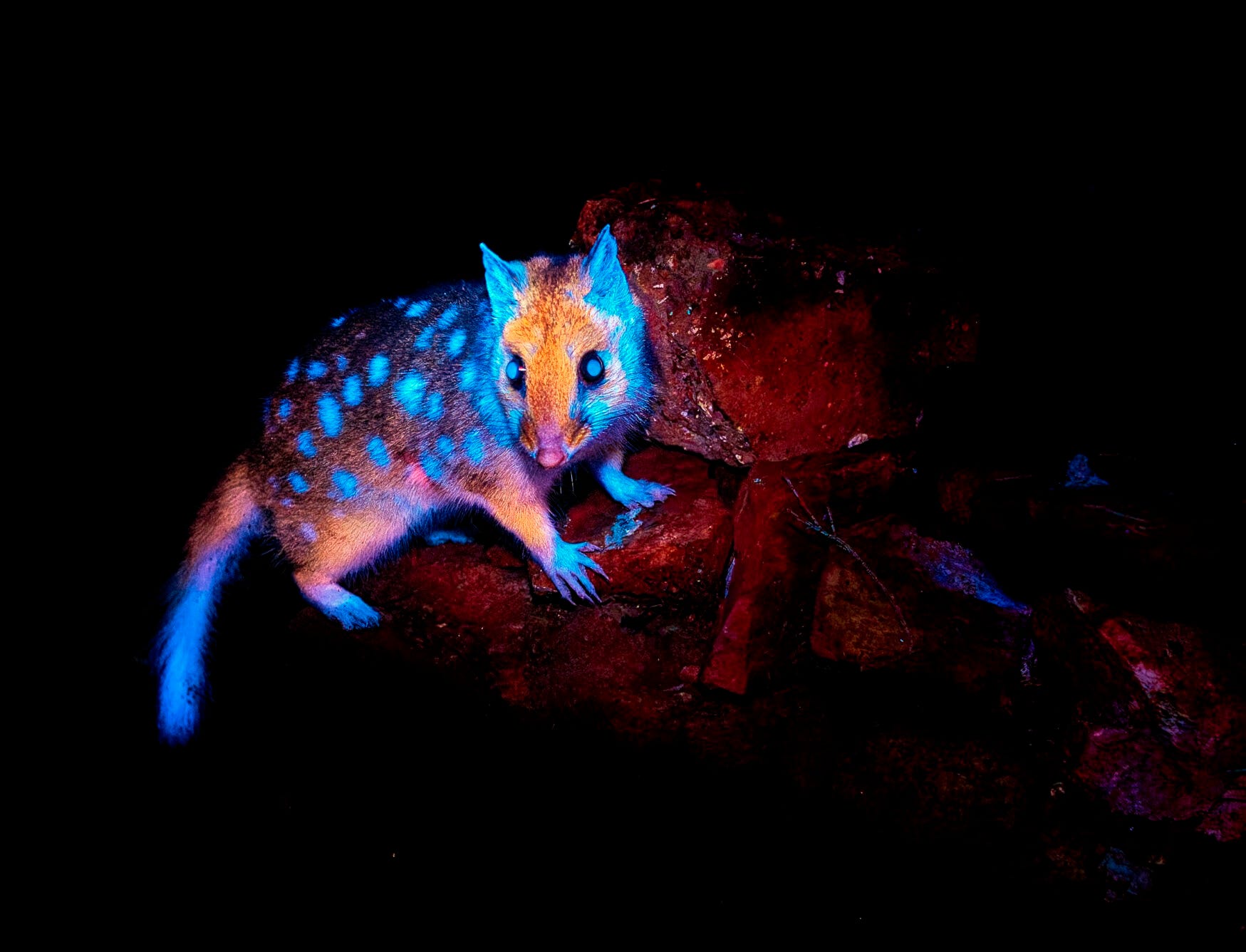
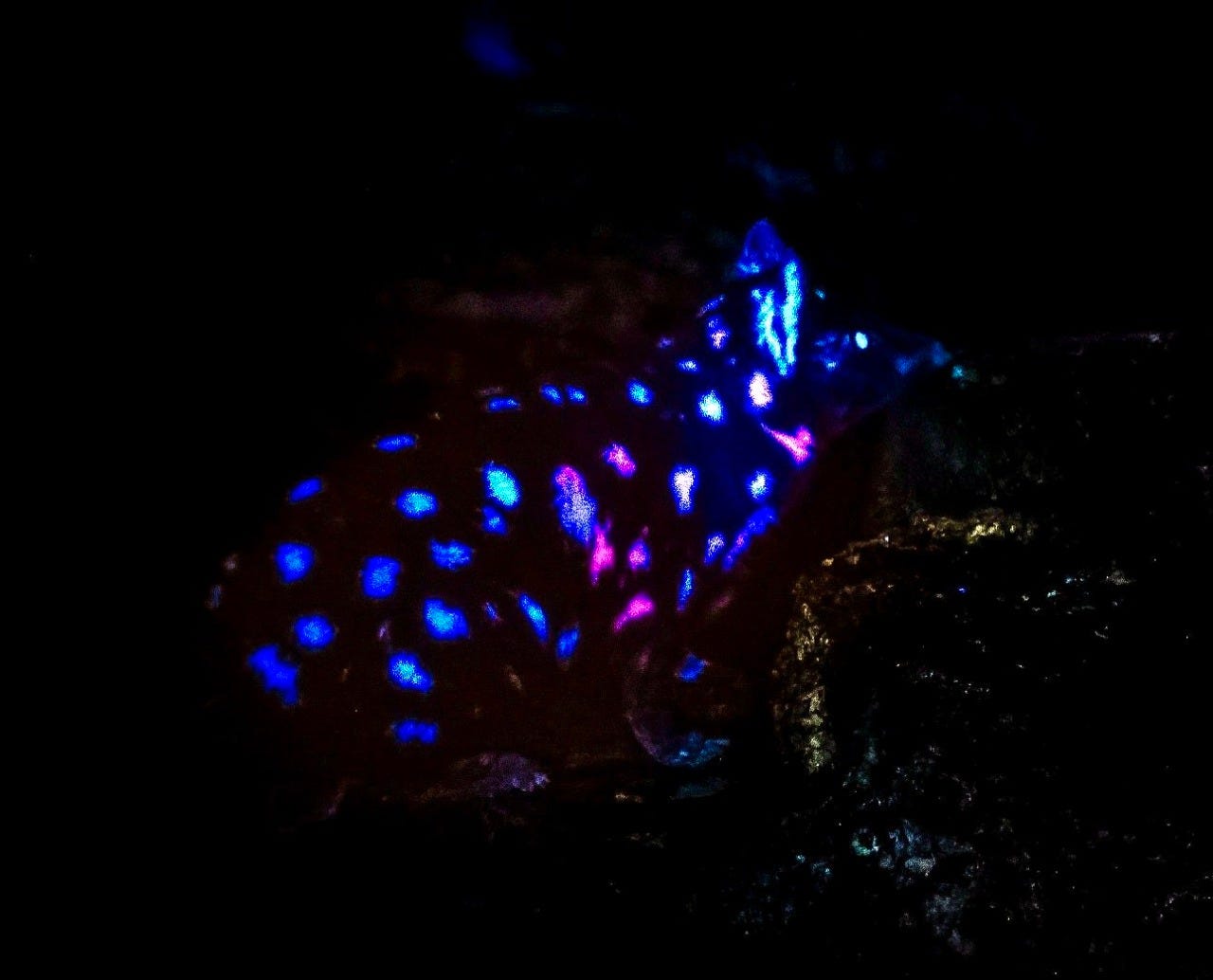
Why does today’s Beast exhibit biofluorescence? Nobody knows. It’s just kind of a party animal. In honor of today’s Beast, go shine a UV light on other small, brownish mammals. Maybe they’ll glow too.