


Good Evening:
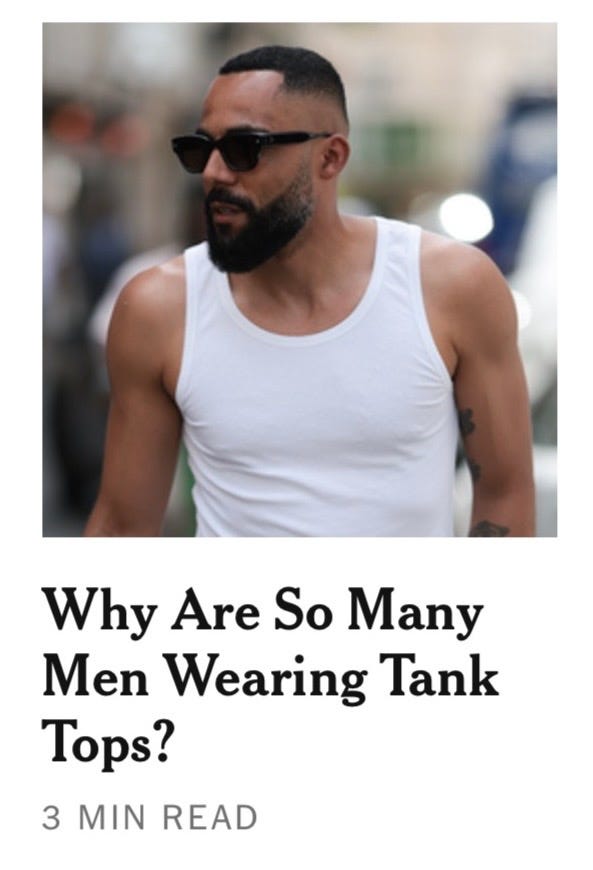
Because it’s getting warm out, and they haven’t yet discovered dog shirts.
Yesterday on #DogShirtTV, the estimable Anastasiia Lapatina reminds us that we’re not the only country with a corrupt president:
Sunday’s MARA Book Club meeting is now available for paid subscribers only, and it is pretty freakin’ great:

Check it out.
Yesterday On Lawfare
Compiled by the estimable Marissa Wang
Remembering Lawfare Contributing Editor Stewart Baker
Annie I. Antón, Robert Chesney, Herb Lin, Michel Paradis, Paul Rosenzweig, Richard Salgado, Peter Swire, Nicholas Weaver, and I share remembrances for our friend and longtime Lawfare Contributing Editor Stewart Baker, who passed away unexpectedly on April 30, 2026.
Last week, longtime Lawfare Contributing Editor Stewart Baker passed away. Stewart was a formidable voice in debates over national security and the law, many of which we hosted in the pages of Lawfare. We are honored to share the following remembrances from his fellow Lawfare contributing editors.
My own contribution is also below.
International Legal Challenges to the Trump Administration’s Immigration Policies
Max Bearinger and Danica Choi unpack a complaint filed with the United Nations special rapporteur alleging that the Trump administration’s policies targeting immigration judges and attorneys violate the International Covenant on Civil and Political Rights. The duo contend that even if the administration does not address the alleged violations of international law, the complaint brings international attention to a broader pattern of actions by the Trump administration that undermine due process and the rule of law.
The complaint alleges numerous violations of these fundamental human rights. It documents how, over the past year, the Trump administration has interfered with two key bastions of due process in the immigration system: immigration judges and lawyers. The administration has fired hundreds of immigration judges, shrunk the number of members on the Board of Immigration Appeals by half, and issued guidance that favors ICE over noncitizens by removing discretion from judges’ hands and encouraging detention and deportation. At the same time, the complaint alleges that the administration has taken measures to ensure that citizens remain unrepresented, including unlawful searches of immigration attorneys like Lattarulo, arbitrary detention and transfers of migrants, and intimidation tactics designed to discourage representation of clients. Against a national backdrop of hostile ICE actions, arrests in the courtroom, patently unjustified raids, and hundreds of cases in which the administration defies court orders granting habeas relief—the administration’s tactics result in a lack of due process for noncitizens.
How the Executive Branch Is Reshaping AI Federalism
Jim W. Ko and Jonathan Stroud explain how the Trump administration is using “managed federalism”—in the form of funding incentives, executive coordination, and policy signaling—to centralize control over artificial intelligence (AI) governance by shaping the conditions of policymaking and influencing how states regulate AI.
This raises a constitutional question extending far beyond AI, and going to the heart of Federalism and states’ rights. When the executive branch unilaterally shapes not only policy outcomes but the allocation of authority itself—between federal and state governments, and among federal branches—what mechanisms preserve the balance that the Constitution assigns to Congress and to the states? In the absence of statutory preemption or Congressional pushback, the answer may lie less in doctrine than in the cumulative effects of executive coordination, which can, over time, reconfigure democratic lawmaking without formally redrawing it. (It also serves the neat trick of avoiding preemption concerns while directly implicating them.)
Is this model of governance emerging around AI an exception to the longstanding federalist balance, or a testing ground for a broader reconfiguration of how authority is coordinated across the modern administrative state?
The Political Limits of China’s AI Diffusion Ambitions
In the latest edition of Lawfare’s Foreign Policy essay series, Ruby Scanlon examines how China’s ambitions for rapid AI adoption are being tempered by concerns about the future of work and employment. Scanlon argues that this growing tension between innovation and fear of social unrest may be constraining China’s AI diffusion.
When a Beijing-based company replaced an employee, identified as Liu, with an automated system, it likely expected China’s courts to side with its decision. After all, the government’s AI Plus initiative targets 70 percent AI adoption across key sectors by 2027 and 90 percent by 2030. Instead, the court sided with Liu.
In a 2025 ruling, a Chinese court ruled that replacing a worker with AI is not valid grounds for dismissal and that firms must first attempt contract renegotiation, retraining, or internal reassignment. Beijing’s labor bureau subsequently published the decision as a “model case,” the Chinese judicial system’s rough equivalent to stare decisis in the United States, signaling how similar disputes should be handled. The case is emblematic of a shift in how Chinese policymakers are preparing for the possibility of AI-driven labor displacement and may foreshadow slowed diffusion of AI in China in favor of worker protections and economic stability.
Podcasts
Lawfare Daily: The Trials of the Trump Administration, May 1: I sit down with Anna Bower, Molly Roberts, Roger Parloff, and Nick Bednar to discuss the second indictment of former FBI Director James Comey, updates in Maureen Comey’s litigation challenging her firing from the Department of Justice, the oral argument at the Supreme Court over the cancellation of Temporary Protected Status, and more.
My Thoughts on Stewart Baker
“I am an anti-authoritarian, but all of my authority figures were liberals,” Stewart Baker said to me once in explaining his exceedingly eccentric politics.
Stewart was about as close as I had to a mentor in the field of national security law. I met him when I was in my early twenties and a cub reporter for a trade newspaper called Legal Times. I had not gone to law school and never would. I knew nothing.
Stewart, by contrast, had just come off a stint as general counsel for the National Security Agency during a particularly fateful period in its history when it had to confront the proliferation of strong encryption in the unclassified sector. He was a partner at a major law firm with a thriving practice. And yet he seemed to have nothing more important to do with his time than to hang out on the phone with me, explaining how national security law worked, both in theory and in practice. He was endlessly patient. I would bring him arguments from his civil libertarian foes, and he would methodically analyze where they had merit and where they did not. He was highly opinionated yet fair-minded. He mingled conservative politics, sometimes wackily conservative, with the mind of a lawyer’s lawyer who knew his way around tech. And he loved sparring with people with whom he disagreed—and, indeed, seemed to love his opponents in a fashion that was as cheerful and friendly as it was pugilistic and pugnacious.
Yes, Stewart’s contrarianism sometimes took him to places he shouldn’t have gone—sometimes on Lawfare. And yes, he could be bullheaded. He once insisted on naming the Ukraine whistleblower in an article he wrote for Lawfare, for example, something I could not allow. In true Stewart fashion, he did not back down. So we got on the phone and laughingly negotiated a compromise, which was reflected in the text of the piece itself. Stewart used the name. I redacted the name. And I authorized Stewart to denounce my decision, which he gleefully—yet also gracefully—did:
Irony alert: You may have guessed that Lawfare won’t let me use the alleged whistleblower’s name here. I think that’s wrong. The identity isn’t classified. The law prevents government employees from identifying the person, not those outside government. And the alleged whistleblower is no more in danger than the many other government employees who testified before the House in public during impeachment proceedings. Not to use the name is security theater. That said, unlike some social media platforms, which would have simply memory-holed my post, Lawfare has allowed me to publish this, and even to include this mini-rant.
I stand by my decision. I also adored Stewart. There is nobody my younger self learned more from in this field. And there are few to whom my mature self owes more in terms of the direction my career took.
Stewart never changed in his generosity to young people. In the wake of Stewart’s death, Jack Goldsmith texted me the other day that, “Last week, I asked him to chat with a student about the NSA commercial espionage exception. He happily agreed. The student wrote back: ‘I had an extremely productive 45-minute conversation with Stewart Baker about my commercial espionage idea that has given me a lot to think about.’” I also got a message from Eve Gaumond, a young Canadian scholar who had met with him a few years back on a project she was working on: “He was uncommonly generous.”
You can find Stewart’s extensive work on Lawfare here.
Today’s #BeastOfTheDay is the puffin, seen here being really busy:
In honor of today’s Beast, bustle around.
