


Good Evening:
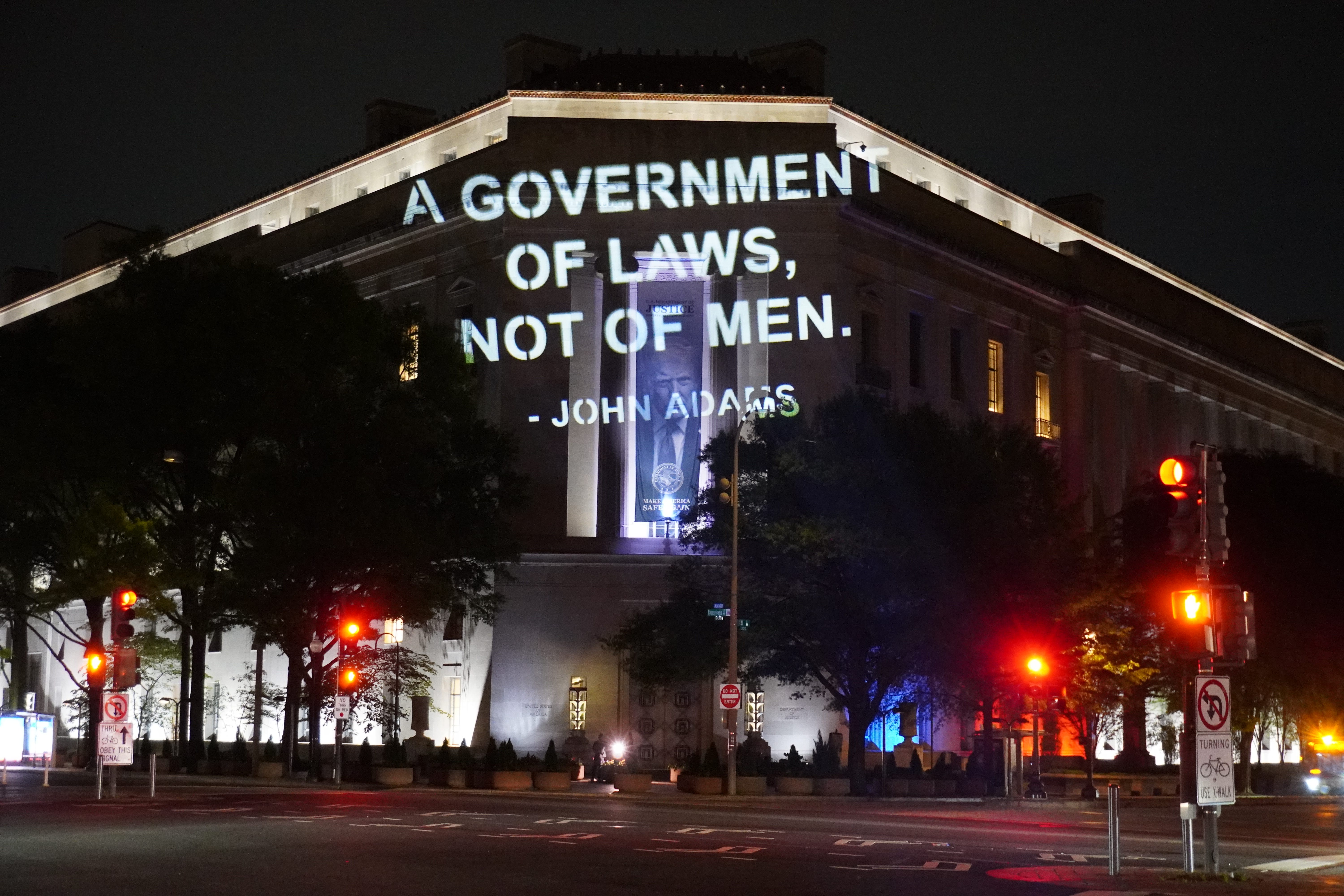
I was honored to team up with the Great Americans at Justice Connection—an organization of Justice Department alumni devoted to helping Justice Department employees and alumni—on this operation this evening. This photograph is completely and totally unedited. Please share it widely. Also, if you are not a supporter of Justice Connection, this evening is a good time to become one. We can’t give them a $1.8 billion slush fund, but we can help out. They’re doing good work.
Some other images from this evening:


Yesterday on #DogShirtTV, I showed off my newest project, which didn’t work perfectly. I’m still working on it:
Yesterday On Lawfare
Compiled by the estimable Marissa Wang
Electrostates, Petrostates, and National Security
Alison Gocke and Ashley Deeks argue that China’s energy strategy, which prioritizes clean energy technologies over oil and gas, offers national security advantages over the U.S.’s continued reliance on fossil fuels. Gocke and Deeks describe how China’s electrostate is more insulated from volatile global oil markets and gives Beijing stronger geopolitical leverage, surveillance opportunities, and potential control over foreign infrastructure compared to the U.S.’s petrostate approach.
With advances in clean energy technology, the world is in the midst of a significant energy transition. Even as these new energy technologies come online, much of the old fossil fuel energy system will remain in place. In this transitional phase, China has embraced the new clean energy system while the United States has doubled down on the old fossil fuel system. Both countries have done so in the name of energy and national security. But the new clean energy system offers substantial and underappreciated security benefits that were not conceivable under the old energy system. Internally, a clean energy system enables a country to compartmentalize the physical and economic aspects of its energy system, shielding it from international market fluctuations. Externally, a country that monopolizes clean energy tech production can weaponize that technology to its own national security ends. While it is too soon to say exactly how the global energy transition will pan out, and its consequences for the United States’ and China’s energy and national security, the war in Iran has illuminated some of the United States’ continued vulnerabilities and China’s growing advantages.
How Much Power Does the EU AI Office Actually Have?
Joel Christoph examines the authorities that the European Union’s (EU) artificial intelligence (AI) expertise center stands to gain in August 2026 under the EU AI Act and argues that the office’s early enforcement decisions will determine if major AI firms treat the EU’s regulatory framework as a serious compliance regime.
The question facing the AI Office is how to use these tools. The choices it makes in its first months of enforcement will shape whether GPAI providers treat the Code of Practice as a serious compliance framework or a voluntary gesture, and whether the EU’s AI governance model is taken seriously by regulators elsewhere.
The Limits of Naval Technology Alone
In the latest edition of Lawfare’s Foreign Policy Essay series, John Severini and Stephen Biddle explain how factors such as training and organizational adaptation can determine naval combat outcomes by drawing on contrasting World War II battles to assess modern U.S.-China naval competition.
World War II, the last time the United States engaged in large-scale naval combat, offers many lessons. In August 1942, a materially inferior Japanese squadron destroyed four Allied heavy cruisers in 33 minutes at the Battle of Savo Island, arguably the second worst defeat in U.S. Navy history. Fifteen months later, at the Battle of Cape St. George, the U.S. Navy won a lopsided victory with the same radar technology that had failed it at Savo Island. The difference lay in nonmaterial factors. In recent research, we argue that training, organization, and institutional adaptation can be decisive at sea, with direct implications for how the United States and China will perform against each other in any future conflict.
Podcasts
Lawfare Daily: The Trials of the Trump Administration, May 15: I sit down with Anna Bower, Eric Columbus, Roger Parloff to discuss Judge J.P. Boulee’s denial of Fulton County’s motion for the return of 2020 presidential election ballots seized by the FBI, Judge Colleen McMahon’s order to rescind the DOGE-backed cancellation of humanities grants, oral argument in Mark Kelly v. Secretary of Defense Pete Hegseth, and more.
Today’s #BeastOfTheDay is the least weasel, which earns the title for being the only Beast I know of with a superlative in its name. But look at it. It really is the least imaginable weasel:

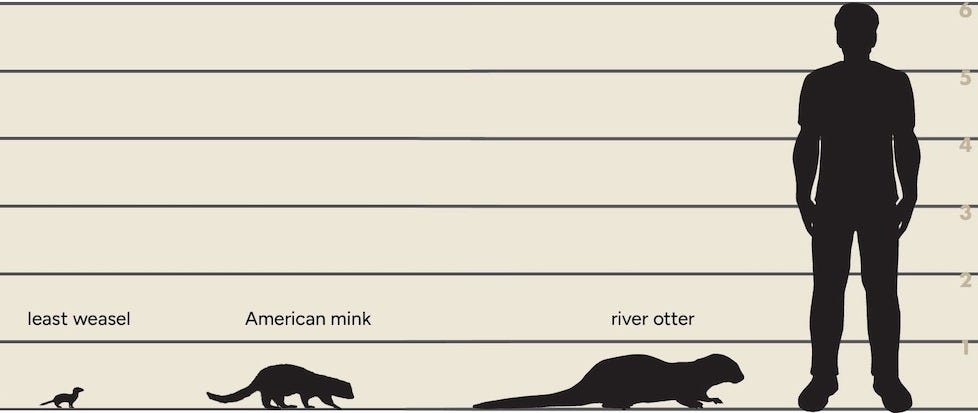
In honor of today’s Beast, consider what other animals might benefit from superlatives.