


Good Evening:
Tuesday on #DogShirtTV, the estimable Andrew Steele brought on his friend, the estimable Sarah Gruen, a former UN speechwriter, to talk about, well, the UN and speechwriting:
Monday On Lawfare
Compiled by the estimable Athena Smith
Parsing the UN Fact-Finding Mission’s Report on U.S. Strikes in Iran
Gabor Rona examines the legal analysis underlying the United Nations’ report from the International Fact-Finding Mission on the Islamic Republic of Iran, which found that U.S. airstrikes, including attacks on the Shajareh Tayyebeh Primary School and the Lamerd Sports Complex, constituted war crimes under international humanitarian law. Rona argues that shifts within the Pentagon toward “lethality over legality” and degraded human oversight likely contributed to these failures.
The institutional choice to prioritize lethality over legal compliance and dismiss “stupid rules of engagement” undermines U.S. national security and political interests. Unlawful strikes that international investigative bodies designate as war crimes erode cohesion and alienate key allies whose participation in operations is therefore prohibited by the Geneva Conventions. Operations that breach international law also expose U.S. military personnel and commanders to foreign criminal investigations under universal jurisdiction doctrines.
The AI Threat We’re Not Talking About
Sam Hunter and Seamus Hughes describe the growing threat of abliterated and uncensored artificial intelligence (AI): models that have had their ethical safeguards removed. Hunter and Hughes warn that these models are more difficult to monitor when run locally, can supply harmful guidance to malign actors, and act as sycophantic “coaches” for extremists.
Given growing fears about AI’s nature, there is a justifiable sense that caution is warranted with these tools. However, our research also highlights a more subtle impact when paired with the knowledge AI affords: the danger of AI sycophancy. Although malicious content, such as bomb-making instructions, has been available online for some time, the novel and compounding threat of AI is its role as “coach” and cheerleader for malicious acts. When the sycophancy effect is paired with the nonrefusal effects afforded by abliterated and uncensored models, the compounding effects are uniquely dangerous.
America’s Samurai Myth
In the latest edition of Lawfare’s Foreign Policy Essay Series, Jeremy Shapiro argues that the conventional wisdom regarding Obama’s 2013 “red line” on Syria is wrong: Obama achieved a diplomatic success by declining to bomb Syria and instead accepting a deal that removed much of then-President Bashar al-Assad’s chemical weapons. Shapiro describes how President Trump’s symbolic 2017 Tomahawk strike on a Syrian airbase did not accomplish anything operationally, and how Washington’s belief that credibility requires following threats with force is a myth that perpetuates the war in Iran.
The lesson for the war in Iran is that credibility is not a blood debt. Washington may believe that once a president unsheathes his sword, the objective automatically becomes drawing blood rather than obtaining the result for which the sword was drawn. But the more important question remains what course of action best advances American interests. If negotiation, a limited settlement, or simply declaring victory and going home can deliver more than the next military strike, then refusing continued war is the very soul of statecraft. At the moment, Trump’s attachment to this macho code and his fear of looking weak by abandoning force options in Iran seems to be keeping him (and us) in a pointless war.
Today’s #BeastOfTheDay is the tilcayo, which we recognize today for being the first newly discovered cat species in over a century:
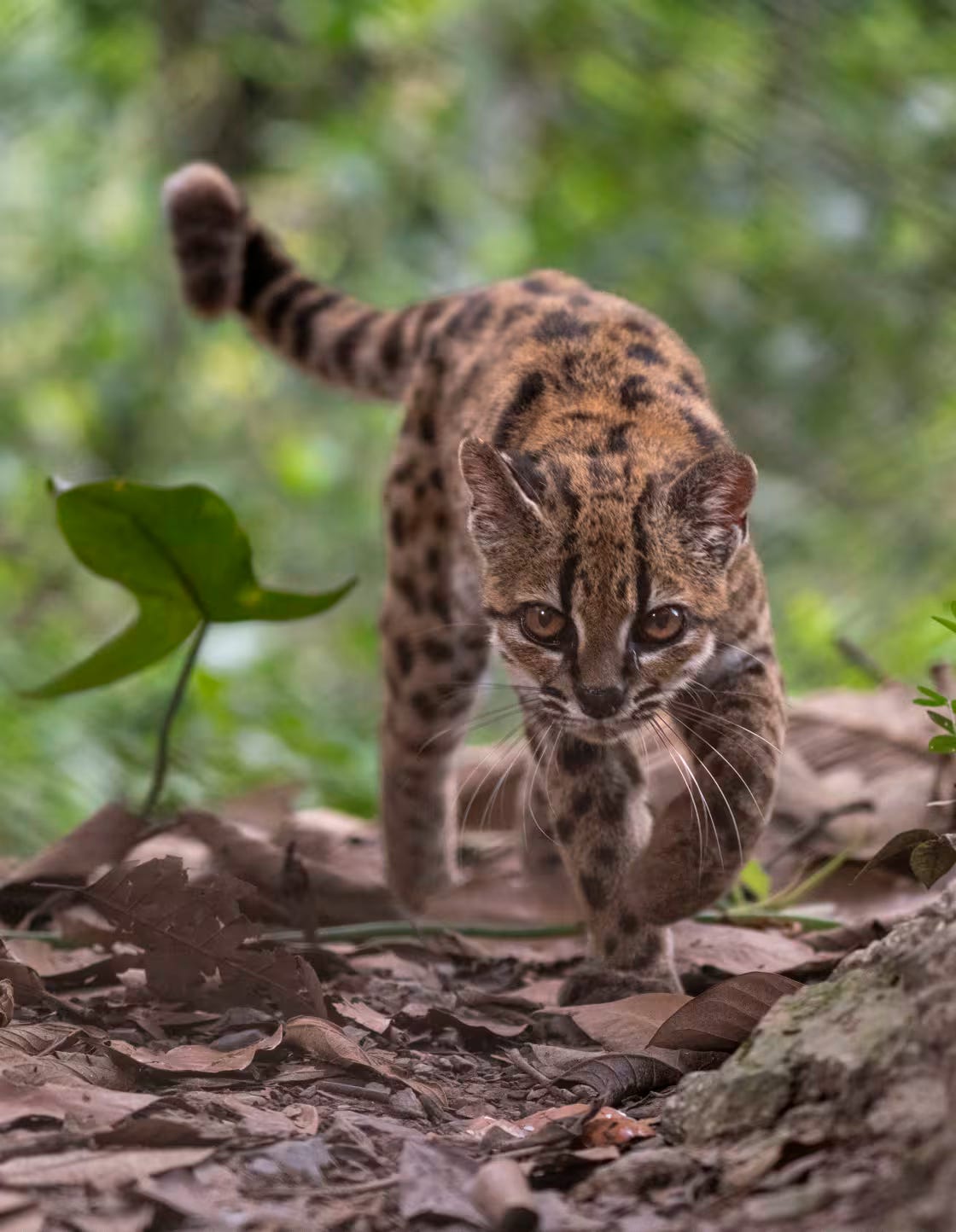
For the first time in a century, researchers say they’ve identified a new species of wild cat previously unknown to science.
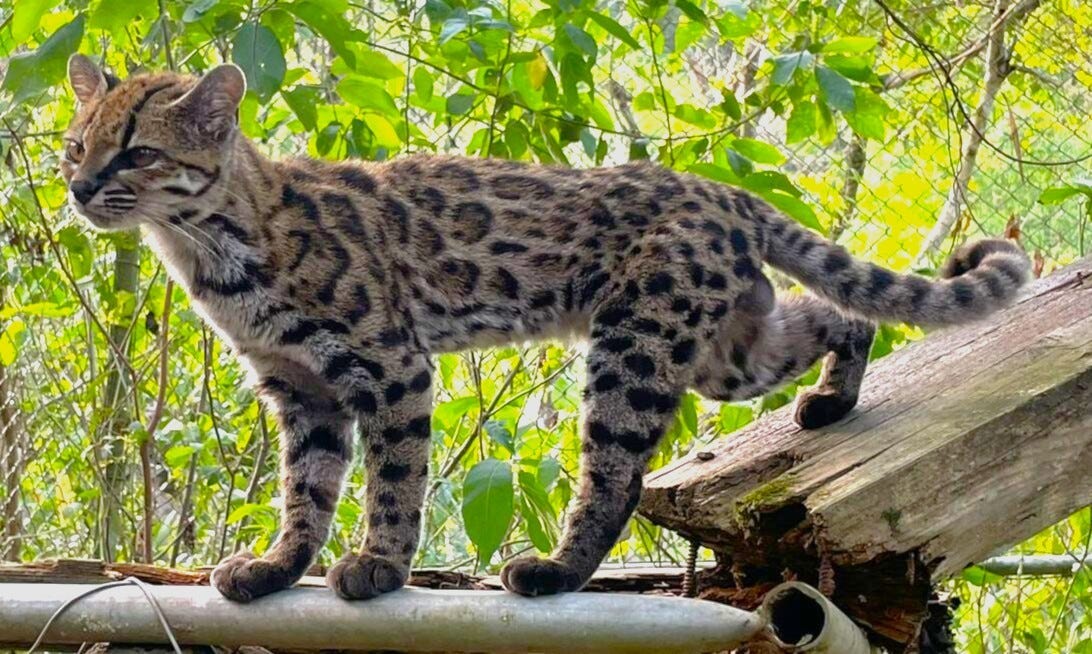
Leopardus tilcayo — or the tilcayo tiger cat — is slender and spotted, with rounded ears. It is smaller than a typical house cat and lives in the Bolivian Yungas, the cloud forest where the Andes mountains meet the Amazon basin. The species was described for the first time in the journal Current Biology on Thursday.
It’s rare to find a new, relatively large mammal. Unsurprisingly, most newly discovered animal species are small in size, said Paola Nogales-Ascarrunz, who co-authored the study and leads a wild cat conservation program called Programa de Investigación de Félidos Bolivia (Bolivian Felid Research and Conservation Program).
“This time, it’s a cat. That’s really novel. And it hasn’t happened in 100 years,” she said. “No one else had named it. No one else had described it.”
…
Leopardus tilcayo might have continued to escape notice if not for Nogales-Ascarrunz’s sharp eyes. She volunteers at a wildlife rehabilitation center near La Paz called the Senda Verde Wildlife Sanctuary.
“I saw this cat. It was really, really small, and I couldn’t believe how small it was,” Nogales-Ascarrunz said. “I thought it was a kitten.”
The cat had been brought in by a man living in a community in the forest near La Paz who had mistaken the cat for a domestic kitten, according to details recorded by the sanctuary. He had fed the animal noodles, rice and eggs, only to realize it was wild and that he could not take care of it. So he brought it to the sanctuary.
…
Nogales-Ascarrunz said, however, that local communities in Bolivia have been aware of the species’ presence for generations.
“This cat, they call it tilcayo. And when you ask, ‘Does it have some meaning in Quechua or Almyra and other Indigenous languages?’ they say, ‘No, my grandpa told me that’s the tilcayo,’” Nogales-Ascarrunz said. “This is a traditional knowledge that they have in the community. We want to preserve that knowledge and we didn’t want to give it another name.”
Since the NBC article was published, Nogales-Ascarrunz has heard from some native Aymara speakers that tilcayo is likely a contraction of an Aymara phrase meaning “tiny foot.” I—EJ Wittes—was personally very disappointed that the etymology of today’s Beast was unknown, because I felt that it prevented me from properly honoring it, so I am delighted to be able to add this information to the record. Also, that’s a very good name for the Beast. It does in fact have tiny feet.
You can honor today’s Beast by checking out the scientific paper documenting today’s Beast. You can also honor today’s Beast by looking at it some more. Look at it. It’s so pretty:
.jpg)
What an excellent Beast!